REVIEW · ZURICH
Explore Zurich in 60 minutes with a Local
Book on Viator →Operated by LocalBini - The go-to platform for Experiences by Locals in Switzerland · Bookable on Viator
One hour can change your Zurich mindset. In a single walking loop, you’ll link major landmarks to the city’s habits and surprises, from Renaissance politics at the Rathaus to the wild origins of Dada.
I like that the tour is built around how locals actually see the city, not just what you should photograph. You get practical food and drinks ideas as you go, plus context that helps you notice what makes Zurich feel Zurich.
I also like the pacing: it’s short, focused, and capped at 6 people, so it stays friendly and question-friendly. The main drawback: this is a tight timeline, so if you want slow, in-depth history, you may wish you had more than one hour.
In This Review
- Key things you’ll notice on this 60-minute Zurich walk
- A 60-minute Zurich walk that fits a first day
- Meeting at Limmatquai 55: where the route clicks into place
- Rathaus to Dadaism: politics meets artistic rebellion
- Grossmünster and the Münsterbrücke: the skyline you’ll recognize instantly
- Fraumünster and the Chagall windows: where art becomes a landmark
- St. Peter’s Church: a clock detail you’ll actually use
- Lindenhof: Roman remnants and a Carolingian power site
- A symmetrical bridge moment and the Gothic finale at Predigerkirche
- What you’re really buying: story + planning help
- Price and value: is $86.16 worth it?
- Who this tour is perfect for (and who should rethink it)
- Should you book this Zurich in 60 minutes with a Local?
- FAQ
- How long is the Zurich in 60 minutes with a Local tour?
- What does the tour cost?
- Where does the tour start?
- Where does the tour end?
- What is the group size?
- Is a mobile ticket used?
- Will I get confirmation after booking?
- Are service animals allowed?
- Is the experience refundable if I cancel?
Key things you’ll notice on this 60-minute Zurich walk
- Rathaus (City Hall): a Renaissance backdrop for Zurich’s political story
- The birthplace of Dadaism: avant-garde history, not museum-only trivia
- Grossmünster towers: the skyline landmark you’ll keep seeing from different angles
- Fraumünster and Chagall windows: one stop where art history matters outdoors too
- St. Peter’s church clock: a specific, standout detail you’ll remember
- Lindenhof viewpoints: Roman and early-medieval layers, plus photo-friendly city views
A 60-minute Zurich walk that fits a first day
Zurich can feel polished at first glance. This tour helps you peel back that shine fast, without turning your day into an all-day school lesson.
You’ll start by learning what locals pay attention to: where the city’s energy gathers, how the old town connects to everyday routines, and why certain buildings still shape movement and views. Even though it’s only an hour, the experience is designed to connect dots—history to present-day ambience, and big monuments to small street-level life.
A few more Zurich tours and experiences worth a look


Meeting at Limmatquai 55: where the route clicks into place
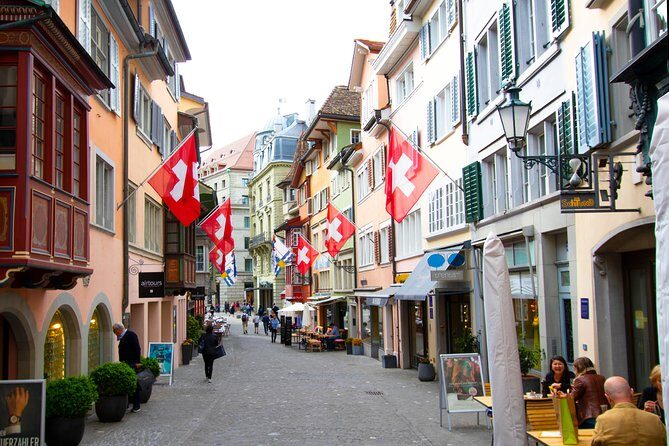
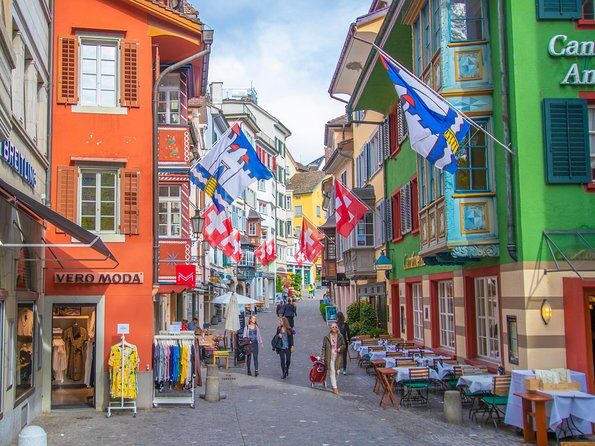
You meet at Limmatquai 55 (8001 Zürich) and end at Predigerkirche, Zähringerpl. 6 (8001 Zürich). That matters because you’re not just bouncing around random sights. The walk flows through areas that naturally “teach” Zurich’s layout: civic buildings, river views, and the religious core of the old center.
This is also the kind of tour where timing helps you. An hour is long enough to get your bearings fast, short enough that you can pivot afterward—museum, boat ride, shopping, or a late lunch.
Practical note: it’s a walking experience, so wear comfortable shoes. Zurich sidewalks can be charming, and they can also ask for good footing.
Rathaus to Dadaism: politics meets artistic rebellion
Your first stop is the historic Rathaus, where Zurich’s political legacy unfolds in Renaissance charm. Rathaus buildings are often impressive on the outside, but the real payoff here is the explanation of why city governance and public life are so visible in Zurich’s center. You’ll leave with a better sense of how civic power has shaped the streets you’re walking.
Then comes a surprise twist: the birthplace of Dadaism. Zurich is famous for stability, but Dada is the opposite—provocation, chaos, and art that refused polite rules. In a one-hour format, this stop is gold because it prevents your Zurich visit from becoming one-note. You get the idea that this city holds room for both order and disruption.
If you’re curious about why Zurich became a magnet for modern ideas, this pairing—Rathaus then Dada—does a lot in very little time.
Grossmünster and the Münsterbrücke: the skyline you’ll recognize instantly
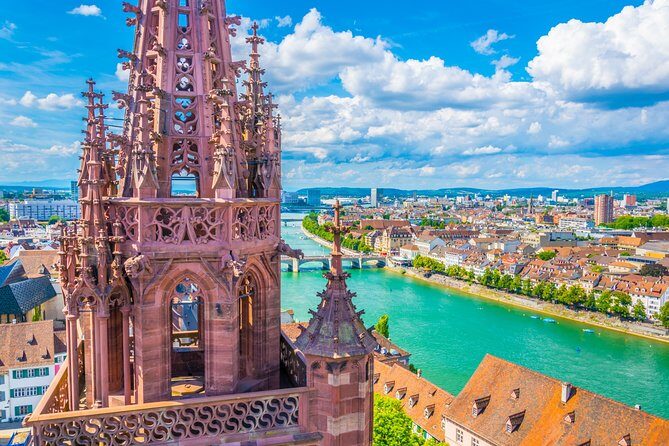
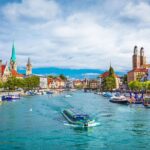
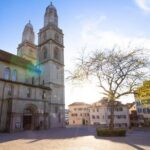
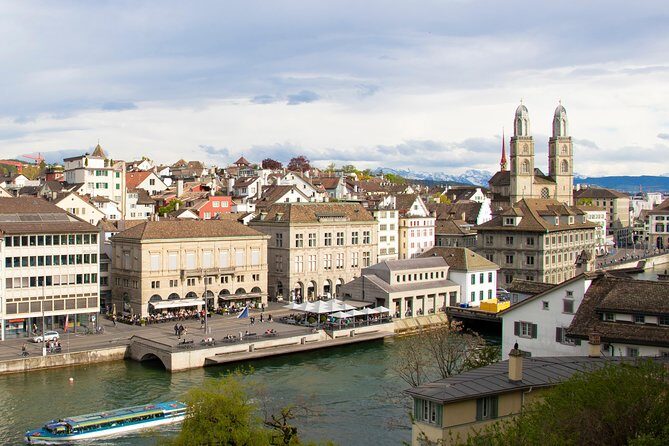
Next up: Grossmünster, the iconic Romanesque church with twin towers that define Zurich’s skyline. The tour doesn’t treat it like just a postcard stop. It’s positioned as a landmark you’ll use to understand orientation—where you are in the city and what direction certain views point.
From there you move to Münsterbrücke, a bridge with ancient roots and clear Swiss significance. Bridges in old-city Zurich aren’t just crossings; they’re viewpoint machines. They align you with river energy and give you a built-in sense of rhythm—look, pause, and then keep walking with a better mental map.
One practical way to use this: after the walk, take five minutes to re-check any views you liked most from the bridge. You’ll be able to name what you’re seeing because you were led to the sight-lines during the tour.
Fraumünster and the Chagall windows: where art becomes a landmark
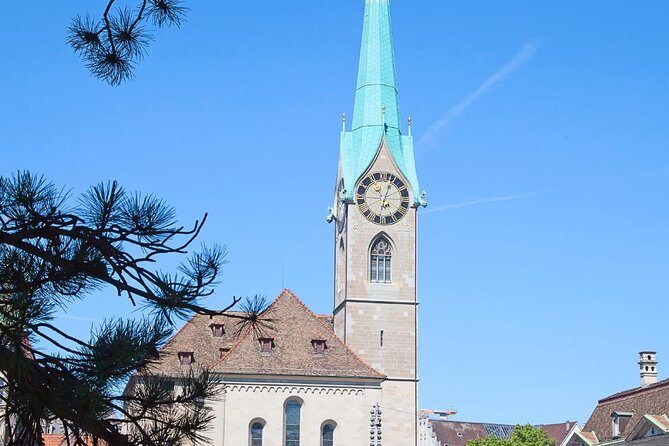
Fraumünster is another stop that earns its screen time. You’ll see its radiant Chagall windows and hear how the church ties into Zurich’s story beyond worship. Even if you’re not an art deep-dive person, the value here is that the windows are specific and memorable. You won’t leave thinking only about the idea of stained glass—you’ll leave thinking about how a particular artist’s work became part of Zurich’s public identity.
This is also one of those “context wins” moments. Instead of treating the church as isolated architecture, you’re guided to notice it as a continuing presence: a building that still shapes how the area feels and how people move through it.





St. Peter’s Church: a clock detail you’ll actually use
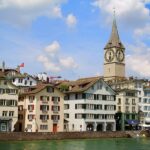
You then visit St. Peter’s Church in Zürich, described as home to Europe’s largest church clock. That’s a fact-heavy detail, and it’s perfect for a short tour because it anchors your memory. When you come back later—on a walk, a photo stop, or even just while wandering—you’ll likely spot a clock face or clock tower and connect it back to what you learned.
St. Peter’s also fits the tour’s broader theme: Zurich’s old core isn’t dead. It’s still active, still legible, and still part of daily city life.
Lindenhof: Roman remnants and a Carolingian power site
Then you reach Lindenhof, where you’ll see remnants of a Roman castle and also a Carolingian Kaiserpfalz site that once stood here. This stop is powerful because it turns a viewpoint into a timeline. You’re not just “looking.” You’re seeing how layers of rule and settlement kept stacking up in the same strategic area.
And this is where the experience gets especially useful for first-timers. After a few landmark stops, it’s easy to forget the city’s deeper structure. Lindenhof helps you remember that Zurich’s importance has long been tied to its positioning—river access, defensive advantage, and the routes people still follow.
A symmetrical bridge moment and the Gothic finale at Predigerkirche

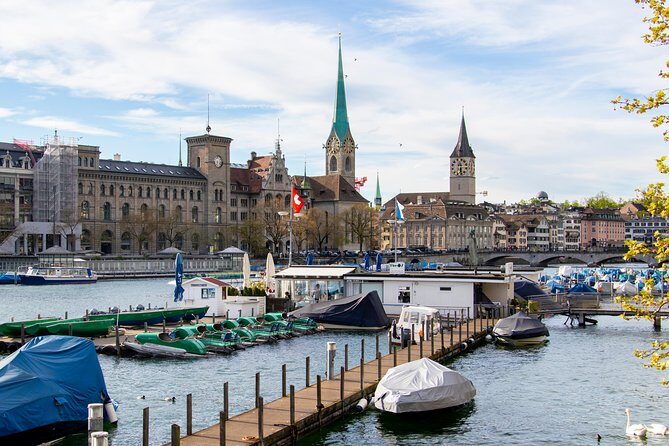
Before you finish, you get one of those “pause and frame it” moments: the tour includes a stretch where you capture Zurich’s charm from a historic bridge with stunning views and a symmetrical design. The key is not the symmetry itself—it’s what it does for your photos and your orientation. It trains your eye on how Zurich composes views.
Finally, you end at Predigerkirche, a Gothic church with an intriguing history. Finishing here is smart. It gives you a satisfying end point you can explore on your own, which is exactly what you’ll want after an hour: one more look inside, a short detour into nearby streets, and then you’re free to choose your next move.
What you’re really buying: story + planning help
The tour promise isn’t just “see sights.” It’s also about leaving with a plan.
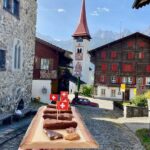
That’s why the walk includes insider tips for best cafes, restaurants, and bars. Zurich can make food decisions feel intimidating if you don’t know what neighborhoods feel right for you. Having recommendations bundled into a route walk is practical—you’re getting ideas at the moment your hunger and curiosity are rising.
Guide style also matters here. In past experiences, guides like Peter have been praised for humorous historical stories and a strong personality that made the facts stick. Another guide, Sandro, has also been noted for asking what you’ve already seen so the tour can be tailored. That “check-in” can be great when your interests are clear—less great when expectations and timing don’t match what you need.
So here’s my simple advice: decide what you want most before you meet. Pick one theme—history, architecture, quirky culture like Dada, or food ideas—and let your guide steer.
Price and value: is $86.16 worth it?
At $86.16 per person for about one hour, this isn’t the cheapest way to tick boxes. But it can be strong value if you’re using it for three things at once:
- A guided route through major, recognizable sights in a short time
- Context that helps those sights make sense instead of feeling random
- Actionable recommendations for what to do next (cafes, restaurants, bars)
The small group size—maximum 6 travelers—also matters. You’re more likely to get questions answered and to feel like the walk fits your interests.
One more detail that helps: the experience uses a mobile ticket, and it’s tied to a private local approach (still limited to a small group). That generally means you should expect a more personal flow than you’d get from a giant bus-style tour.
Also, this tour is often booked about 7 days in advance on average. If you’re traveling in peak periods, booking earlier can help you lock in a time that works with your day.
Who this tour is perfect for (and who should rethink it)
This experience is ideal if you:
- are in Zurich for the first time and want fast orientation
- like history, but in short, story-based chunks
- want more than sightseeing—specifically where to eat and drink
- prefer small groups and a guided walk over self-guided reading marathons
It may not be your best fit if you:
- want deep historical context for every stop
- expect an hour to cover the “why” behind everything in great detail
- need your route adjusted for unusual weather or shifting plans in real time (customization may depend on your guide and your communication at the start)
A tight schedule is the nature of this kind of tour. If your goal is slow learning, plan more time in Zurich on your own.
Should you book this Zurich in 60 minutes with a Local?
I’d book it if you want a smart first-day scaffold: landmarks you’ll recognize later, plus local suggestions you can actually use the same afternoon or evening.
Skip it (or pair it with extra time) if your top priority is thorough history or you’re the type who hates feeling rushed. This is a “get your bearings fast” tour, not a semester in Swiss history.
If you do book, come with two things in mind: one thing you want to learn (Dada, church architecture, civic history, or views) and one kind of meal or drink you’re aiming for. That way, you’ll get the most out of the short route and the local recommendations.
FAQ
How long is the Zurich in 60 minutes with a Local tour?
It lasts about 1 hour.
What does the tour cost?
The price is $86.16 per person.
Where does the tour start?
The meeting point is Limmatquai 55, 8001 Zürich, Switzerland.
Where does the tour end?
The tour ends at Predigerkirche, Zähringerpl. 6, 8001 Zürich, Switzerland.
What is the group size?
The tour has a maximum of 6 travelers.
Is a mobile ticket used?
Yes, it includes a mobile ticket.
Will I get confirmation after booking?
Yes, confirmation will be received at time of booking.
Are service animals allowed?
Yes, service animals are allowed.
Is the experience refundable if I cancel?
No. This experience is non-refundable and cannot be changed for any reason.