REVIEW · ZURICH
Zurich a journey through time, history and the Reformation
Book on GetYourGuide →Operated by Züri City Tours · Bookable on GetYourGuide
Zurich gets political fast. This tour turns Reformation history into a walk you can feel, starting in the Old Town and moving through the city’s key places tied to Huldrych Zwingli and the ideas that shook Europe. It’s also a clean mix of streetscapes, church interiors, and story-led stops that help the whole era make sense.
I love two things in particular: the focus on the real sites of the Zurich Reformation and the way the guide makes the story human, not textbook. I also like the Fraumünster stop with admission included, especially because you get to see the Chagall window cycle in the choir, not just glance at the building from outside.
One thing to think about: this experience isn’t suitable for wheelchair users, and the route is built around walking and short stops. If you’re hoping for every church interior on your schedule, note that access to Old Town churches after 17:00 isn’t part of the offering.
In This Review
- Key highlights worth showing up for
- Zurich Reformation, told like a story you can walk through
- Starting at Heiristeg and getting your bearings above the Limmat
- Roman traces before sermons: the archaeology you can point at
- St. Peter, Wasserkirche, and Grossmünster: how the route shapes faith and power
- Fraumünster: the choir windows and the layers beyond art
- Legends, anecdotes, and the Zwingli you can picture
- How the 2.5 hours work in practice (and what to wear)
- Price and value: what $194 per person really buys you
- Who this tour is best for
- Final call: should you book this Zurich time-travel walk?
- FAQ
- How long is the tour?
- What’s the meeting point?
- Is this tour private?
- Which languages are available?
- What’s included with the Fraumünster visit?
- Are any major attractions not included?
- Is food or drinks included?
- Is the tour wheelchair accessible?
- What’s the cancellation policy?
Key highlights worth showing up for
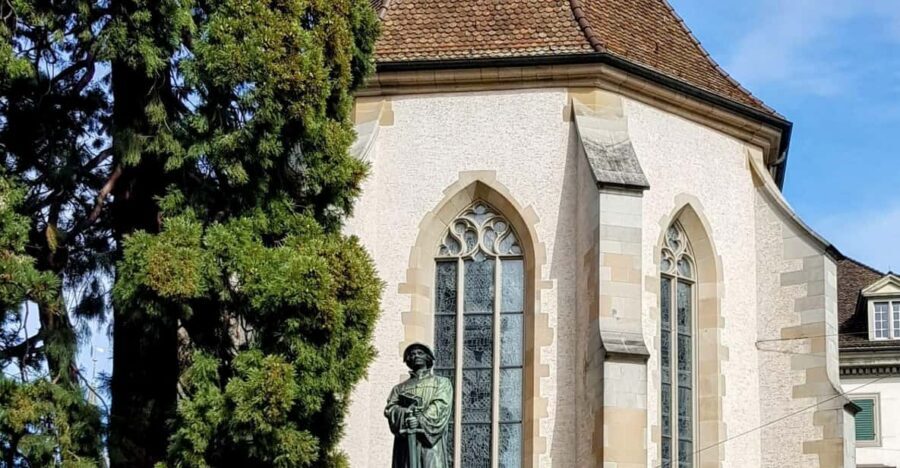
- Zwingli’s Zurich, on the ground: you’ll walk in the footsteps of the reformer who pushed radical change from inside this city.
- Fraumünster with Chagall windows: admission is included, and the guide adds layers beyond the artwork.
- Roman-to-Reformation contrast: you’ll see Roman-era traces before you hit the sermons and debates.
- Old Town atmosphere, guided in English or German: a live, accredited guide keeps the pacing lively for a 2.5-hour circuit.
- Views from Lindenhof: you get a high-angle look over the Limmat and city that connects geography to history.
- Stories, legends, and anecdotes: the guide’s narrative style is part of the value, not an extra.
Zurich Reformation, told like a story you can walk through
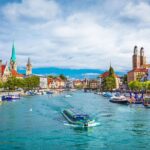
Zurich is the kind of city that looks calm from across the lake, but it has a serious past. This tour uses that contrast on purpose. You start in the medieval core, then keep moving until the Reformation story doesn’t feel abstract anymore—it feels like it happened in these streets, from these conversations, among these buildings.
The big strength is the framing. Instead of treating the Reformation as distant “European history,” the route explains how this city became a center of radical change and what that meant for Switzerland and beyond. You’ll hear why Zurich—of all places—became the cradle of reform, and you’ll connect those ideas to the places where Zwingli preached and debated.
I also like that the tour isn’t only about church conflict. You’ll get Celtic and Roman origins as context, plus Zurich’s legends and local anecdotes that give the city a pulse. That matters because you’re not just learning facts—you’re learning how to read the city: which corners feel like power, which places feel like faith, and how the same stones can hold different eras.
Finally, the guide experience can make or break this kind of tour, and the record here is strong. Bruno is repeatedly praised for being attentive and explaining things clearly, with short video clips used for extra historical context. That combination—good storytelling plus quick visual support—helps the Reformation themes land fast.
Other historical tours in Zurich
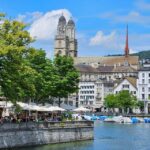
Starting at Heiristeg and getting your bearings above the Limmat
The meeting point is at the corner of Uraniastrasse 1 / Heiristeg, and the tour loops back to Heiristeg at the end. Starting here is smart because it sets you up to look at Zurich both from street level and from above.
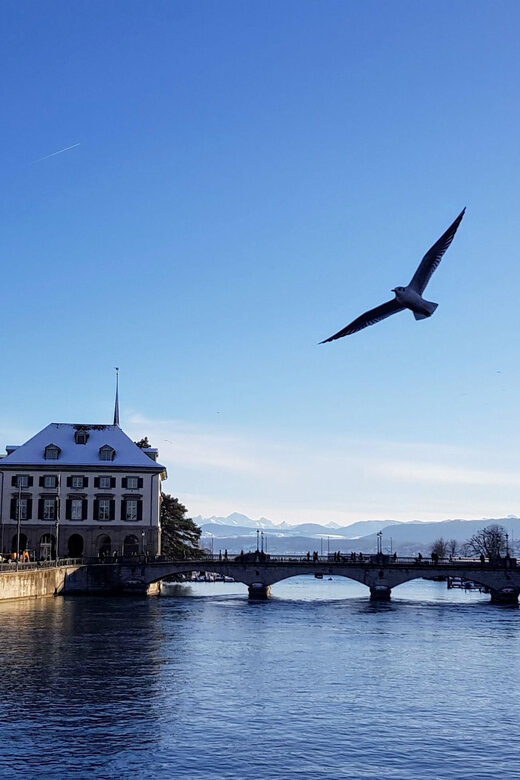
Right away, you head to Lindenhof, with a short guided stop that focuses on view and meaning. You’ll stand where the Romans once stood guard, then look out over the Limmat and the city that Zwingli helped transform. It’s a quick pause, but it’s the kind that makes everything else easier to understand. When you later pass bridges and churches, your brain already has a “map” in it.
In practical terms, expect early walking on cobblestones and uneven paving—nothing extreme, but it’s not the smooth-tarmac kind of stroll. Wear shoes you’d be comfortable in for short uphill and downhill micro-slopes. If the weather is rainy, your pace might slow a touch, so build in a little flexibility.
And because this is a private group, your timing can feel less rushed. In a small group you can ask a question without feeling like you’re holding up a crowd.
Roman traces before sermons: the archaeology you can point at
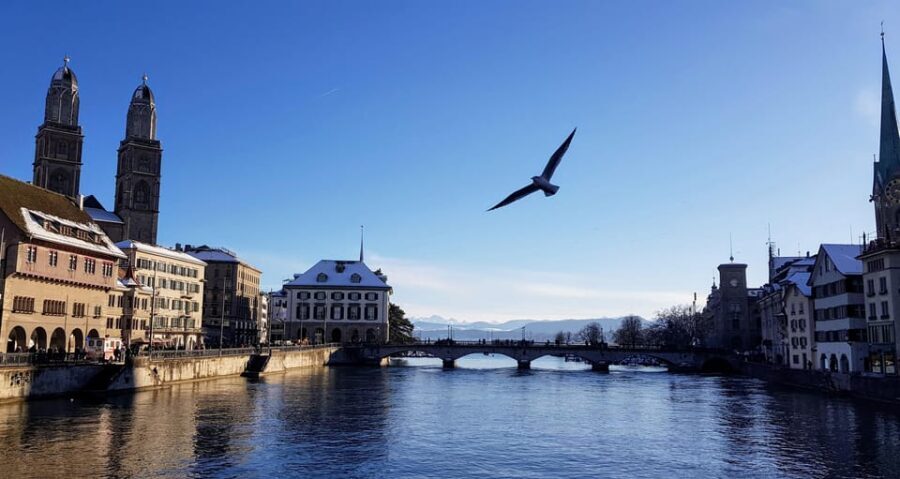
One of the most satisfying moves here is the order. You don’t jump straight to reformers and religious debate. You see earlier layers first, so the Reformation feels like a new turn in an older story.
You’ll pass by the Archäologisches Fenster, where you get a guided look that connects archaeology to the city’s longer timeline. This kind of stop works well because it’s visual. Instead of only hearing about ancient Zurich, you see traces that make the past physical.
Next is a stop focused on a Roman heater system. That might sound oddly specific, but it’s exactly the point. Small, concrete details like this help you imagine everyday life—how people heated buildings, how they used infrastructure, and what “Roman” meant beyond maps and textbooks.
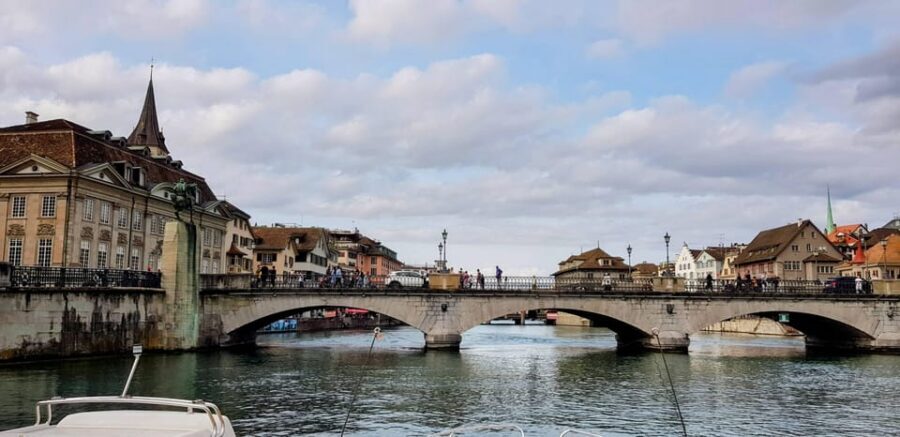
Then comes Rathausbrücke (the town hall bridge area), where the stop is short but strategic. Bridges are natural storytelling points because they connect neighborhoods and they frame the city’s flow. Even if you’re not staring at every building façade, you’re building context for where civic power lives.
The benefit for you: by the time Zwingli’s era arrives, you won’t feel like history is a list of names. You’ll feel like history is layers—Celtic and Roman origins, then civic and religious power, then debate turning into action.
A consideration: the tour is timed tightly, with multiple short guided segments. If you want lots of lingering at one single spot, you may have to accept that this is a paced walkthrough rather than a slow museum visit.
St. Peter, Wasserkirche, and Grossmünster: how the route shapes faith and power
As the walk moves deeper into the Old Town, the churches become more than landmarks. They function like “chapters,” each one changing the tone.
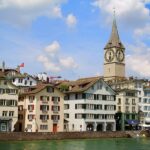
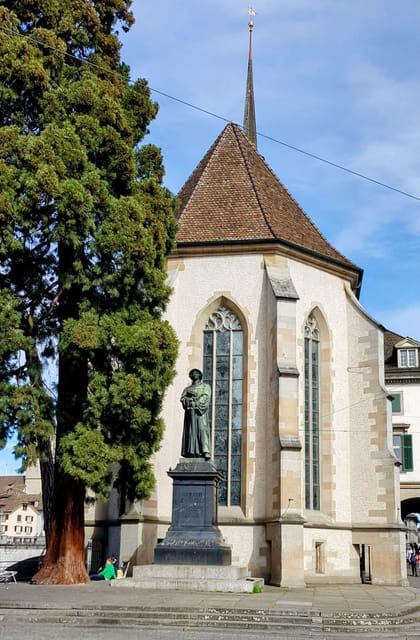
You’ll visit the Church of St. Peter, Zurich for a guided stop. The tour frames the stop as part of the broader religious and social history around the Reformation. You’re not just looking at architecture; you’re hearing how the city’s faith life links to reform ideas.
After that, you move toward Wasserkirche, with a dedicated visit. Again, the emphasis is on context—why these places mattered, and how Zurich’s Reformation energy played out in real locations.
Then there’s Grossmünster, with a visit time built into the route. You’ll see it as part of the city’s reform story. One practical note: Grossmünster Tower isn’t included, so if you were hoping to go up for extra views from the tower, you’ll need a separate plan.
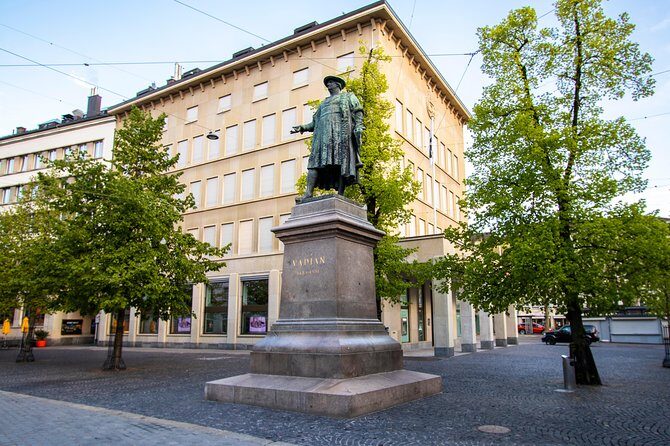
You also make a short stop at a Hans Waldmann Statue (the statue is listed with the year 1937 and credited to Hermann Haller). Even if you don’t know Waldmann’s story going in, the guide’s job here is to connect the statue to the broader civic narrative—how reform and governance intertwined in Zurich.
And scattered throughout are additional short stops—street-side pauses that keep the momentum while still letting the guide land key points. This is good for most people because it prevents the tour from feeling like one long lecture. It also keeps energy up over the 2.5-hour format.
Fraumünster: the choir windows and the layers beyond art
If you’re deciding whether a Reformation-focused walk is worth your time, the Fraumünster visit is the clearest reason. The tour includes admission to the Fraumünster, and you get a 20-minute visit inside, led in a way designed for context, not just sightseeing.
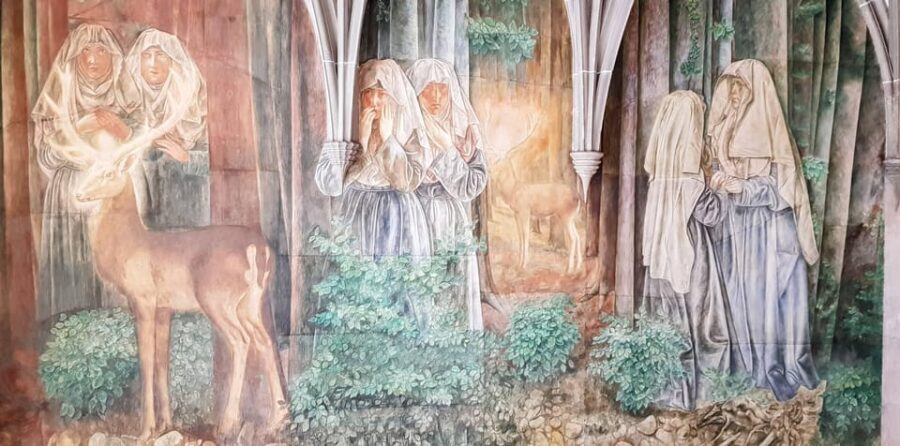
Fraumünster is famous for the Chagall window cycle in the choir, and you’ll be able to take it in with guidance. What makes this stop special for you is the way it’s framed as more than art appreciation. The guide explains religious and social layers that go far beyond the windows themselves. That’s useful if you’ve ever looked at a famous artwork and thought, I can see it’s important, but why.
Because this guide is an accredited Fraumünster guide, you’re also less likely to get a generic “look at this, it’s old” kind of experience. The guide is built for this specific church, and that shows in how the story is organized.
The pacing here matters too. You’re not rushed through. You get a dedicated chunk of time for the inside visit, which helps you actually look rather than just move along.
Practical advice: church interiors can be cooler than the street in summer. Bring a light layer if you run cold easily.





Legends, anecdotes, and the Zwingli you can picture
One of the best ways to understand a movement like the Reformation is to understand the people navigating it. This tour leans hard into stories and anecdotes—Zurich’s legends, the drama behind sermons, and the way ideas challenged tradition.
You’ll specifically walk in places connected to Huldrych Zwingli—the bold reformer who turned Zurich into a center of radical change. The guide ties it all together around the questions you’d naturally ask: why Zurich, what changed, and why that mattered beyond the city.
What really stands out from the feedback is the guide style. Bruno is praised as friendly and personable, not just fact-heavy. He also uses short videos as quick context, which is a smart technique for busy attention spans. When history involves debate and ideology, a short visual clip can help you follow the storyline before you get lost in dates and names.
If you like tours where you’re not handed a timeline like a worksheet, this is the right tone. You’ll learn, but you’ll also get an experience that feels like you’re walking alongside a narrator who knows how to keep the pace moving.
How the 2.5 hours work in practice (and what to wear)
This tour runs for about 2.5 hours and is designed as a tight Old Town loop. It’s private group, which helps with pacing and questions, and it operates in German and English, so you can choose the language that keeps you comfortable.
The route includes multiple guided stops—around 10 to 15 minutes each—plus visits where you spend time inside key places like Fraumünster, Wasserkirche, and Grossmünster. You’ll also pause at viewpoints and bridges for shorter guided segments, which breaks up the walking.
For your comfort, plan for:
- Comfortable walking shoes (cobblestones and short uneven stretches)
- A weather-ready layer (church interiors and Swiss weather can swing)
- No food included (so if you’re prone to getting hungry, bring a snack you can eat before or after)
Also consider the access limits. The tour includes access to the Fraumünster (admission is included), but Old Town church access after 17:00 isn’t part of the offer, and Grossmünster Tower isn’t included. If you’re doing this later in the day, it’s worth aligning expectations with what’s actually included in the route timing.
Price and value: what $194 per person really buys you
At $194 per person for 2.5 hours, you’re paying for a focused, guided experience rather than a casual walk. In Zurich, guides can cost more than you expect, so this price only feels fair if you’re getting more than “see the sights” coverage—and here you do.
You’re getting:
- A live guide in German or English
- Private group format
- Accredited Fraumünster guide expertise
- Fraumünster admission included
- A story-led route tied to Zwingli and the Reformation
- Skip-the-ticket-line support for the church component
That combination matters because church access and context-based guidance have real value. A general city tour might cover one church exterior. This tour uses churches as anchors for a bigger narrative—religion, civic life, and change.
If you split costs with friends or family, the “private” angle can bring the value closer to a mid-priced shared tour while still keeping the experience personal. If you’re a solo traveler, it can still make sense if you want a guide who can actually answer questions and keep the flow.
Who this tour is best for
This is ideal for you if:
- You like history that connects to specific places you can walk to
- You care about the Reformation as an event that shaped European culture
- You want church stops with explanation, not just architecture photos
- You prefer a guide who tells the story with clarity and a bit of media support (short videos)
It may be less ideal if:
- You need wheelchair access (the tour is not suitable for wheelchair users)
- You want a slow, sit-down pace with lots of extra independent time in each church
- You’re specifically hunting for Grossmünster Tower viewpoints (not included)
Final call: should you book this Zurich time-travel walk?
If you want Zurich beyond postcards, I think this tour is a strong choice. The value is in how the route connects early origins (Celtic and Roman references), the civic center (bridges and the town hall area), and the Reformation turning points anchored to Zwingli and Fraumünster.
Book it if you like story-driven guided walking and you want your time in the city to feel purposeful. Skip it only if you’re looking for a simple “best of Zurich highlights” loop or you need full accessibility accommodations.
If you do book, aim to dress for walking, plan a small snack because food isn’t included, and go in ready to ask questions. With a guide like Bruno—praised for being attentive, friendly, and extra clear with context clips—you’ll likely leave with a much sharper picture of how ideas took hold in Zurich and spread outward.
FAQ
How long is the tour?
The tour lasts about 2.5 hours.
What’s the meeting point?
The official meeting point is at the corner of Uraniastrasse 1 / Heiristeg. The guide can also meet you at Zurich main station by prior arrangement.
Is this tour private?
Yes, it’s offered as a private group experience.
Which languages are available?
The tour runs in German and English.
What’s included with the Fraumünster visit?
Fraumünster admission is included, and you’ll see the Chagall window cycle in the choir as part of the visit.
Are any major attractions not included?
Grossmünster Tower is not included.
Is food or drinks included?
No, food and drinks aren’t included.
Is the tour wheelchair accessible?
No, it isn’t suitable for wheelchair users.
What’s the cancellation policy?
Free cancellation is available up to 24 hours in advance for a full refund.