
REVIEW · ZURICH
Zurich: Tutankhamun immersive exhibition incl. VR experience
Book on GetYourGuide →Operated by Swiss Activities AG · Bookable on GetYourGuide
Egypt without the long flight. Zurich’s TUTANCHAMUN show uses multimedia, 360-degree visuals, and a VR walk through the Valley of the Kings and the burial chamber. I love how it brings the Nile world and its mysteries together in one ticket, and I also like that the VR experience feels like a direct ticket into the story. One thing to consider: the VR segment can feel short—about 8 minutes—so it’s not a full-length headsets marathon.
The big payoff here is the mix of art, setting, and guided storytelling style, all in one day. You’ll move through a virtual and augmented reality area where you can follow paths similar to the way Howard Carter encountered the tomb in 1922. The only drawback I’d flag is pacing: if you’re the type who wants to linger, some parts may move at a brisker tempo than you expect.
In This Review
- Key things to know before you go
- A one-day ticket to Ancient Egypt in Zurich
- What the multimedia show does with 3,400 years of Egypt
- Following the Nile, temples, and treasures along your route
- Howard Carter’s 1922 moment, translated into VR
- The 360-degree effects that make the room feel bigger
- Price and value: is $41 worth your time?
- What to expect from timing and pacing
- Practical tips for a smoother visit
- Who should book this experience in Zurich
- Should you book TUTANCHAMUN in Zurich?
- FAQ
- Where is the TUTANCHAMUN immersive exhibition located?
- How much does a ticket cost?
- How long is the experience valid for?
- What’s included with admission?
- Is the ticket line skipped?
- What’s not included in the price?
- Is the experience wheelchair accessible?
- What age is it suitable for?
- What’s the cancellation policy?
Key things to know before you go
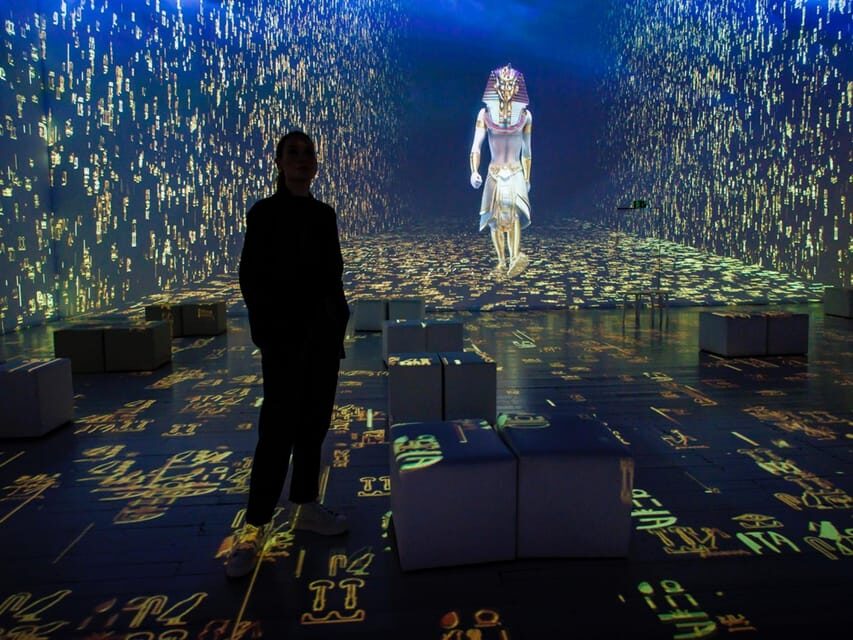
- VR of the burial chamber: you’ll find the tomb area in a guided virtual/augmented setting.
- Valley of the Kings paths: the experience includes walking through winding paths in VR.
- 360-degree viewing: the show uses wide, room-filling visuals to set the scene.
- Tutankhamun’s treasures and art: the focus stays on the child pharaoh and what we inherited from his era.
- One-day entry: you’re buying day admission that includes the VR time.
- Skip the ticket line: the ticket includes a line-saver so you can get started faster.
A one-day ticket to Ancient Egypt in Zurich
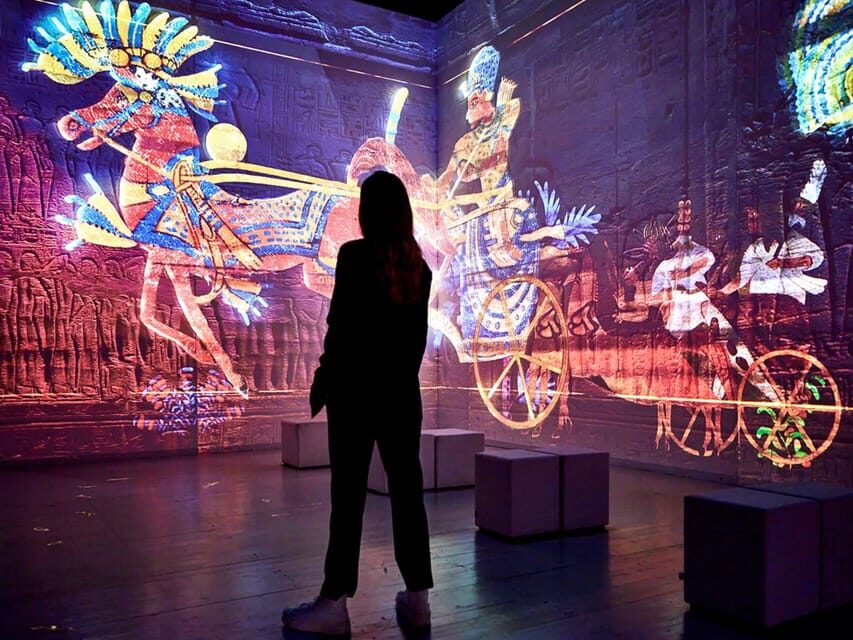
If you want a culture hit that doesn’t require museum-jigsaw planning, Zurich’s TUTANCHAMUN experience is a solid choice. You can fit it into a single day because the ticket is valid for 1 day, and the venue is in Canton Zurich.
What I like most is that it doesn’t treat Ancient Egypt like a distant lecture. The show takes you through the Nile region 3,400 years ago and pushes you from fertile river banks out toward desert-era structures and mysteries. It’s structured like a story you walk through, not like a room full of cases where you stand and squint.
Another strength: this isn’t just about visuals. It ties the visuals to the idea that so much of what we know about that period still feels partly unexplained. That mix of wonder and evidence tends to land well, especially if you’re traveling with kids, or if you personally learn better when the context is dramatic.
Other museum experiences in Zurich



What the multimedia show does with 3,400 years of Egypt
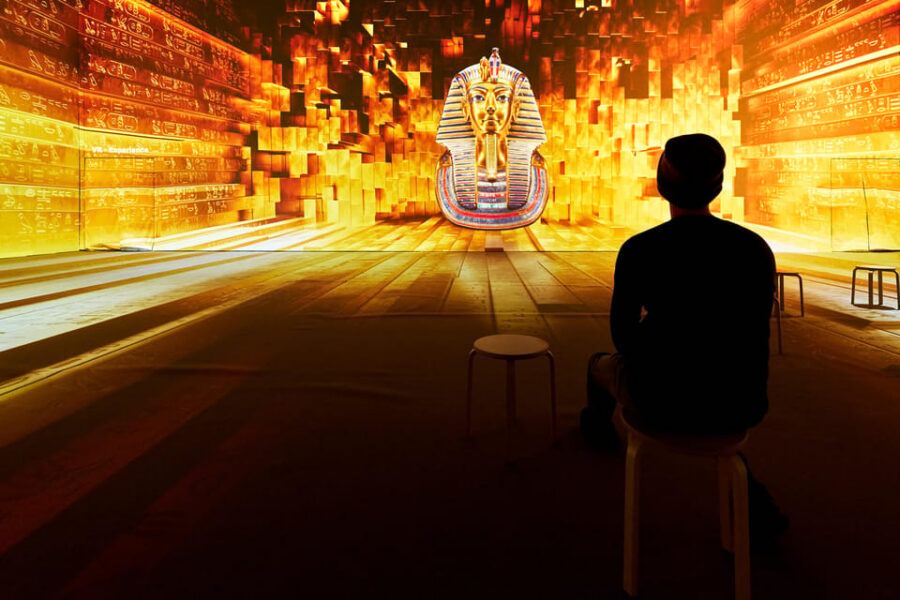
The core concept is time travel, but in a practical, visitor-friendly way. You’re guided through a version of the Nile world, from fertile farmland and river life to the arid spaces where big-building projects happened. Then you circle back to the story of Tutankhamun, the child pharaoh, and the mystery of what was found and how.
You’ll see the emphasis on temples and treasures, and that’s important for value. Many “immersive” experiences lean too heavily on special effects. Here, the framing is: you’re learning about the people and objects that carried meaning, not only watching effects.
The experience is also built around the idea of walking through Egypt’s geography—valley, desert structures, and tomb setting. Even if you know some Egyptian history already, the way it organizes themes (Nile → temples/treasures → tomb discovery) makes it easier to hold onto what you’re seeing.
Following the Nile, temples, and treasures along your route
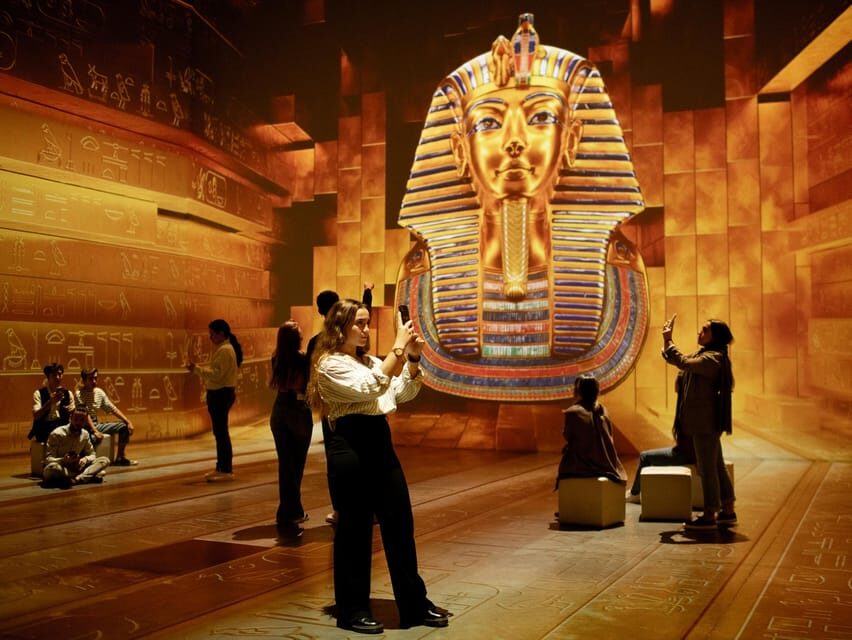
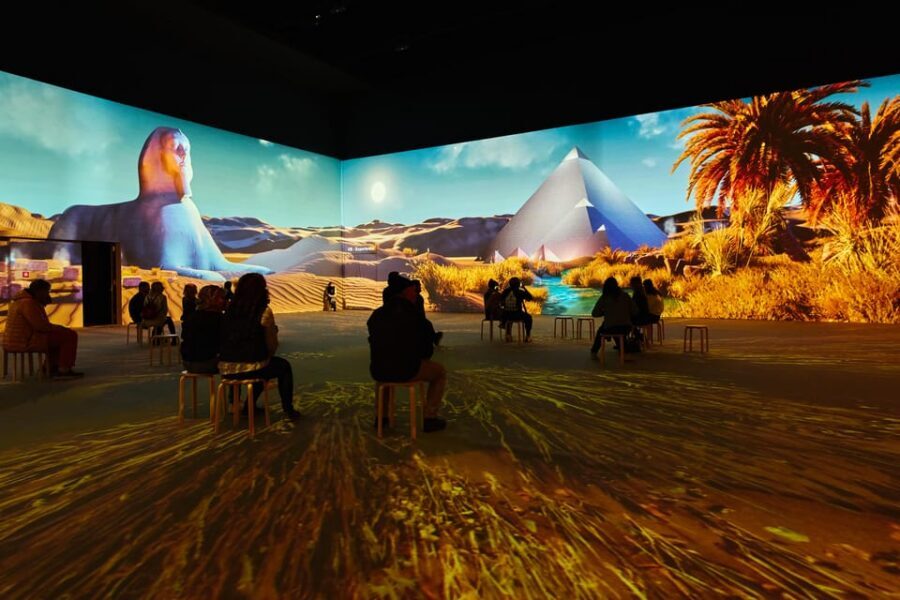
You can expect your visit to focus on a set of thematic zones tied to the story. The experience takes you from the Nile region to the desert, then into places connected with Tutankhamun’s story and legacy.
The Nile part matters more than it sounds. It’s what makes the later scenes feel grounded. When you understand that the civilization depended on the river, the shift to arid landscapes stops being a random visual change and becomes part of the logic of the story: resource, building, belief, and burial traditions.
Then the show turns toward temples and treasures. This is where you get a sense that the artifacts and art aren’t just decorations—they’re linked to ceremonies and status. If you like explanations that connect objects to culture, this part is satisfying because the emphasis is on the treasures of Tutankhamun and the artistic side of his era.
Howard Carter’s 1922 moment, translated into VR
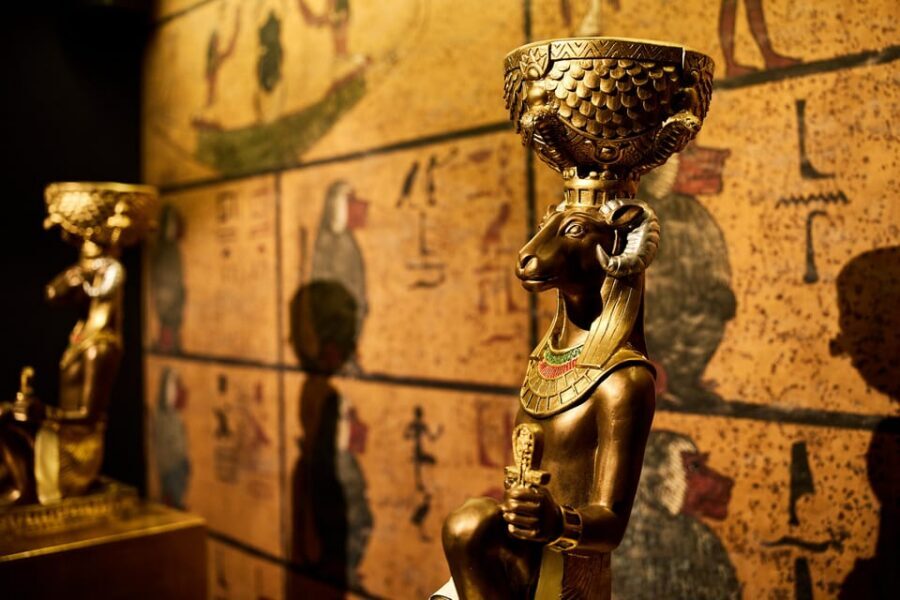
The centerpiece for most people is the VR experience: you’ll walk along paths in the Valley of the Kings and find Tutankhamun’s burial chamber, with the experience framed around how Howard Carter discovered it in 1922.
This is a clever choice because Carter’s role provides a bridge between the ancient story and the modern discovery story. You get an entry point that feels familiar: the 1922 discovery is a known historical anchor, even for people who don’t know much Egyptian history.
How it feels in practice: you follow winding routes and move through the tomb setting in a way that’s hard to replicate in a traditional museum. Instead of reading about a place, you’re experiencing the geometry of it. That’s the real advantage of VR here.
One important consideration: don’t expect the VR portion to run long. Based on feedback, the headset time can feel brief—around 8 minutes. For some visitors, that’s perfect (quick, memorable, not tiring). For others, it may feel like you want more time in the burial chamber.
The 360-degree effects that make the room feel bigger
The experience also includes a 360-degree component, which affects how you perceive the space. In a show like this, the room is part of the storytelling. Instead of facing one screen straight-on, you get a sense that the environment wraps around you.
That matters if you’re sensitive to museum monotony. A standard exhibit gives you one angle at a time. A 360-degree approach gives you more cues about where you are and what you should pay attention to, which can make the learning stick better—especially for first-timers.
You’ll likely get the most out of this if you don’t rush your viewing. Even if you’re excited, take a moment to look around during the 360-degree segments. The trick is simple: let the scene establish itself before you try to spot details.






Price and value: is $41 worth your time?
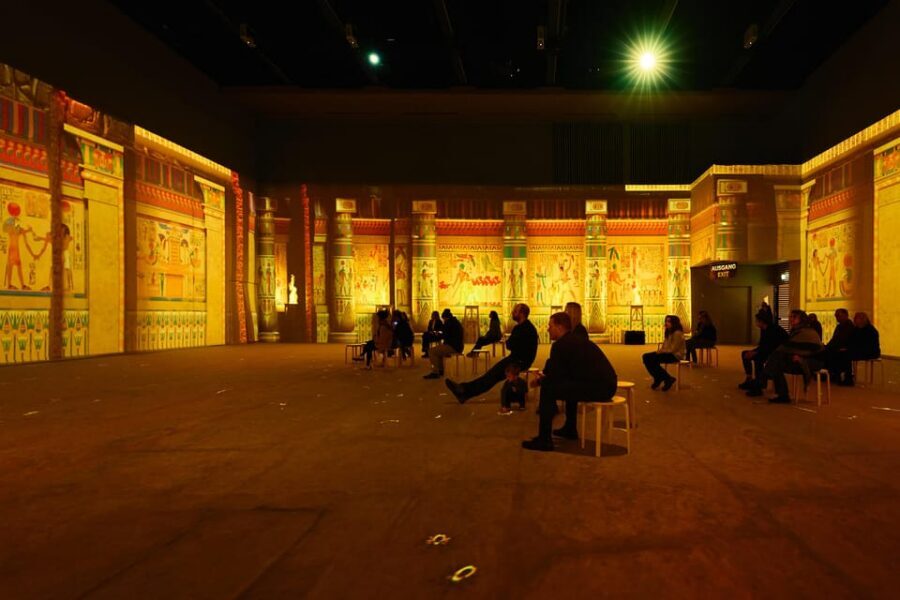
At $41 per person, the main value question is: do you want VR plus a full-day, story-driven exhibition, and will you actually use the VR time?
Here’s how I’d think about it.
This is good value if:
- You want a structured, one-stop Ancient Egypt experience in Zurich.
- You’re curious about Tutankhamun and prefer a narrative format over a pure artifact tour.
- You’ll take advantage of the included VR experience and 360-degree elements.
It might not be worth it if:
- You’re hoping for a long, slow, museum-style wandering session.
- You specifically want VR for far longer than about 8 minutes.
- You prefer learning through reading and labels only, with minimal multimedia.
The fact that your day admission includes the VR experience is the key part of the price math. And since the ticket includes skip the ticket line, you lose less time to queues and more to the show itself. That line-skip tends to matter in real life, especially on busy days.
What to expect from timing and pacing
You’re buying day admission, and starting times depend on availability. That means you’ll want to plan your day around your chosen start time rather than arriving whenever you like.
Pacing is the main experiential variable. The show’s story structure and VR segment mean you’ll likely move from one part of the experience to the next in a fairly guided flow. That’s usually a benefit: it keeps momentum and reduces decision fatigue. But if you’re the type who likes to linger over every artifact and read every sign, the experience may feel tighter than a traditional museum.
Also, the VR portion is a known short segment. If you’re going mainly for the VR, treat the day as a complete package: do the rest of the exhibition so you’re not left thinking the VR was the only highlight.
Practical tips for a smoother visit
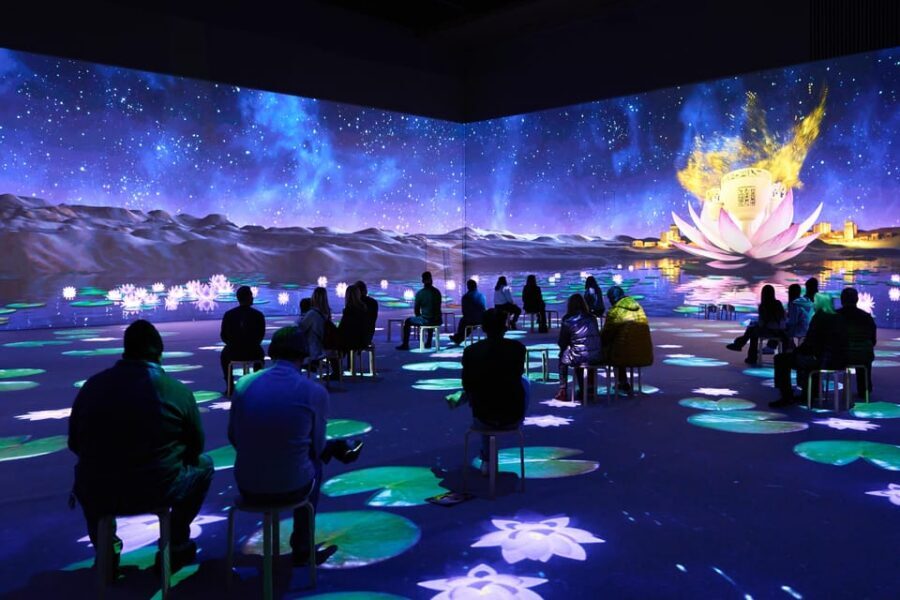
A few on-the-ground pointers will help you get more out of the experience.
First, plan for essentials even though ticketing is set. Checkroom and parking aren’t included, and arrival logistics aren’t part of the ticket. If you’re carrying a bag, factor in time to handle it on-site.
Second, wear what works for VR comfort. The data doesn’t specify dress requirements, but VR comfort is always practical: avoid overly tight headwear, and if you wear glasses, make sure you’re prepared for how they’ll fit inside the headset setup.
Third, arrive with a simple mindset: this is a multimedia narrative. You’ll enjoy it more if you go in expecting story-driven learning—Nile to desert to tomb setting—rather than expecting a quiet, label-heavy museum experience.
Finally, if you’re bringing family, this is one of those places where attention can stay focused because the visuals and VR create a natural rhythm. Just note it’s not suitable for babies under 1 year.
Who should book this experience in Zurich
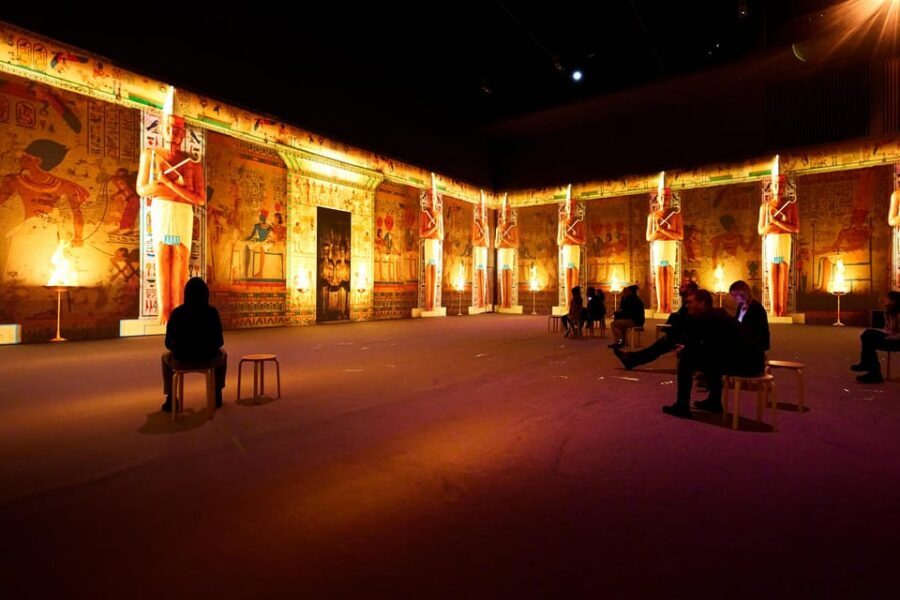
This experience fits best if you want the wow-factor without building a multi-stop itinerary. It’s also a strong match for:
- Families looking for an Egypt theme with technology and clear story structure
- Curious adults who want more than static exhibits
- First-timers who want an easy entry to Tutankhamun’s world, including the discovery story tied to Howard Carter’s 1922 moment
It may be less ideal if you’re a hardcore Egypt-history reader who needs deep, text-heavy details and lots of time with artifacts. The exhibition is built to be experiential, and the VR time being relatively short supports that style.
One more note: it’s wheelchair accessible, which makes it a more inclusive option than many venues that rely on stairs and narrow museum corridors.
Should you book TUTANCHAMUN in Zurich?
I’d book it if you want a one-day, story-based Ancient Egypt experience that combines Valley of the Kings VR, the burial chamber segment, and 360-degree visuals—all for a straightforward day admission price of $41. If VR is on your list and you’re okay with the headset time being relatively brief, this is a very efficient way to get a memorable Egypt experience in Zurich.
I’d skip or reconsider if you mainly want long VR time, slow museum wandering, or a quiet environment focused on reading alone. In that case, you may find the show’s pacing a little tighter than you prefer.
If you’re on the fence, use this simple rule: you’ll probably love it if you like learning by experiencing scenes, not just by looking at them.
FAQ
Where is the TUTANCHAMUN immersive exhibition located?
It takes place in Canton Zurich, Switzerland.
How much does a ticket cost?
The price listed is $41 per person.
How long is the experience valid for?
Your ticket is valid for 1 day, and you’ll need to check availability to see starting times.
What’s included with admission?
Day admission is included, along with the VR experience.
Is the ticket line skipped?
Yes, the ticket includes skip-the-ticket-line entry.
What’s not included in the price?
Checkroom, parking, and arrival are not included.
Is the experience wheelchair accessible?
Yes, it is wheelchair accessible.
What age is it suitable for?
It’s not suitable for babies under 1 year.
What’s the cancellation policy?
Free cancellation is available up to 24 hours in advance for a full refund.