REVIEW · ZURICH
Zurich: Old Town Walking Tour
Book on GetYourGuide →Operated by Guydeez Tours · Bookable on GetYourGuide
Zurich’s old town turns questions into street answers. I love how the route strings together big sights and small alley details, especially the Chagall Windows at Fraumünster and the skyline views from Polyterrasse ETH. One thing to consider: the tour is only as good as the guide on the day, so if the conversation stalls, you may feel like it turns into a supervised stroll.
You’ll start near Hotel Scheuble (meeting point) and head off from Mühlegasse 17, which is handy when you’re trying to orient quickly in Zurich. The good news is you can often get a guide who makes the city click, like the ones praised for personality and storytelling (for example Laura, Alexander, and Celine). The not-so-good news is that a few experiences have been light on information, so go in with a simple plan: ask what each place meant, not just what you’re looking at.
In This Review
- Key points at a glance
- Starting at Mühlegasse 17: where you meet and how to time it right
- Hirschenplatz: the square that sets the tone
- Polybahn funicular and Polyterrasse ETH: quick routes to big views
- Zentralbibliothek Zürich: city walls you can actually spot
- Brunngasse and Spiegelgasse: Zurich’s charm with a political twist
- Grossmünsterplatz and the Grossmünster stops
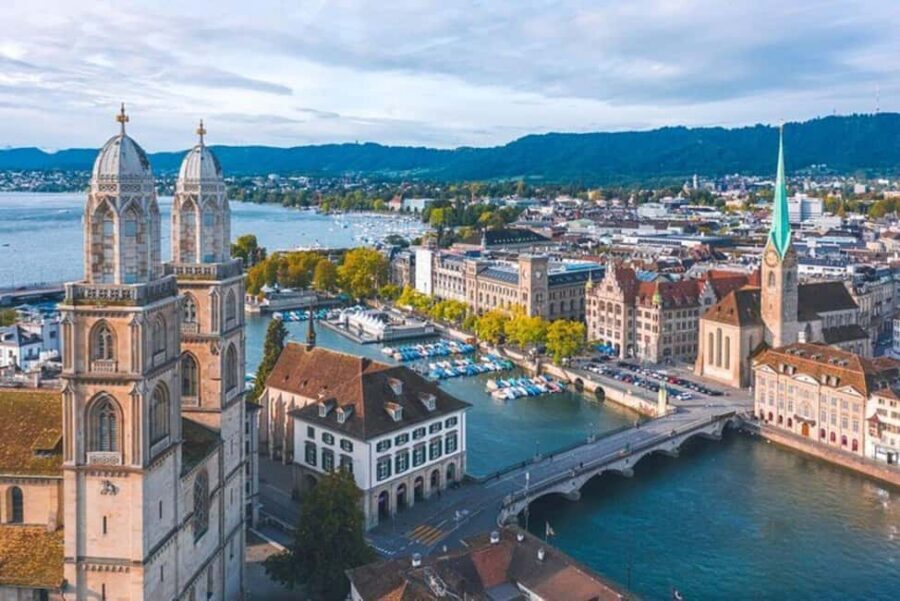
- Fraumünster and the Chagall Windows: the visual hit
- Wasserkirche: underground ruins and the execution of Felix and Regula
- Lindenhof Hill: ending with ruins you can sense beneath your feet
- Price and guide quality: where value comes from (and when it doesn’t)
- Best for: who will enjoy this tour most
- Should you book the Zurich Old Town Walking Tour?
- FAQ
- What is the duration of the Zurich Old Town Walking Tour?
- Where does the tour start?
- How much does it cost?
- Is the tour wheelchair accessible?
- What languages are offered for the live guide?
- Is there a private group option?
- What key sights are included?
- What is the tour type?
- Is free cancellation available?
- Is reserve & pay later available?
Key points at a glance
- Hirschenplatz starts the story with historic buildings and a local-feeling square
- Polybahn + Polyterrasse ETH deliver serious viewpoints in a short time
- Fraumünster and Chagall Windows are the visual centerpiece for many visitors
- Brunngasse and Spiegelgasse mix everyday charm with political history details
- Wasserkirche and Felix and Regula add a darker medieval layer, literally underground
- Lindenhof Hill closes with ruins you can still picture from above
Starting at Mühlegasse 17: where you meet and how to time it right

This is a tight, 2-hour walk, so the meeting moment matters. You meet near Hotel Scheuble, and the route begins at Mühlegasse 17. That area is easy to reach once you’re oriented, and it helps you get moving without spending your limited time trying to find the first landmark.
Because the tour includes multiple sites that people associate with different eras (medieval churches, city walls, and modern viewpoints), I recommend you arrive a few minutes early and be ready to follow the group closely. A couple of disappointments in real-world experiences have come down to late starts or communication hiccups, and with only 2 hours, there isn’t much slack.
Other Old Town and walking tours in Zurich


Hirschenplatz: the square that sets the tone

Hirschenplatz is the first proper taste of Zurich’s Old Town rhythm. It’s not just a photo stop. The square area gives you a sense of how historic Zurich feels when you’re walking on real streets that people still use.
What I like about starting here is the mix: old buildings, wine-bar type atmosphere, and history you can sense even before a guide starts talking. Even if you’re not the type who reads every plaque, a good guide can translate a square like this into something you can carry through the rest of the walk. It’s a smart opener because it prepares you for the smaller lanes that come next.
Polybahn funicular and Polyterrasse ETH: quick routes to big views
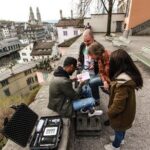
From there, the tour heads toward Central Polybahn, the cable car/funicular that gives you a fast way to see Zurich from above. It’s a classic move in this city: use public infrastructure to get elevation without turning your day into a steep workout.
Then you continue to Polyterrasse ETH for another viewpoint. This is one of the reasons this walk works well for first-time visitors. In a short window, you get a wider sense of how the old core sits within the bigger city—river, neighborhoods, and the sense that Zurich is planned rather than chaotic.
Practical note: the tour data doesn’t spell out ticket inclusion for the funicular, so if your guide points you toward purchasing transit for it, that’s not a red flag. It’s worth having a way to pay ready so you don’t lose time.
Zentralbibliothek Zürich: city walls you can actually spot
Next comes Zentralbibliothek Zürich, tied to old city fortifications and sections of the former walls. This stop is valuable because it changes your mental map. After you’ve looked outward from Polyterrasse, you switch to looking at how the city protected itself.
When you see wall remnants, it clicks that Zurich’s old center wasn’t just built for beauty. It was built to defend. A good guide can help you connect the stonework to the wider story of medieval city life. If you get a more talkative guide—people have praised this with guides like Laura and Celine—that explanation can turn this from a quick stop into a true anchor point for the tour.
If you’re someone who tends to move fast and hate pausing, this is still worth it, but don’t let the group drift too far. Those wall elements are easier to appreciate when you’re looking with context.
Brunngasse and Spiegelgasse: Zurich’s charm with a political twist
Brunngasse is one of those Old Town streets that feels made for a slow stroll. The tour moves through it, keeping the walking flow while showing you the kind of lane details Zurich is known for—tight sidewalks, old facades, and the sense that the city is stitched together from many small layers.
Then you get Spiegelgasse, where the tour highlights that Lenin once lived in Zurich. This is a big historical name for a narrow street, and it helps keep the walk from feeling like only churches and viewpoints. It also gives you a different kind of “Zurich history”: not just rulers and builders, but people and ideas.
There’s another small detail here that I appreciate. The tour notes an old picture in a private building—so even if you’re not the first in line to spot it, it’s the kind of thing a guide can point out quickly so you don’t miss it.
Other walking tours we've reviewed in Zurich
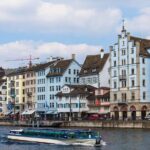
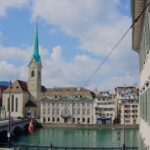


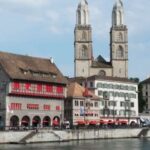
Grossmünsterplatz and the Grossmünster stops
Grossmünsterplatz sets you up for the Grossmünster visit. This isn’t just an exterior pass. The tour includes highlights like a hidden cloister and a chapel with a medieval baptismal font.
Why this matters: churches in Zurich can feel similar from street level, but once you step into these specific features, the city starts to differentiate itself. A medieval baptismal font is the kind of object that instantly makes the place feel older than the surrounding architecture. It adds a lived-in, ceremonial past to the walk.
The cloister angle also breaks the pattern. Instead of only looking outward, you experience quiet architectural space. On a day when the weather is changeable or the city is crowded, these indoor pockets can be a relief.
Fraumünster and the Chagall Windows: the visual hit
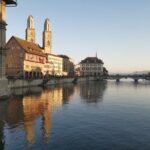
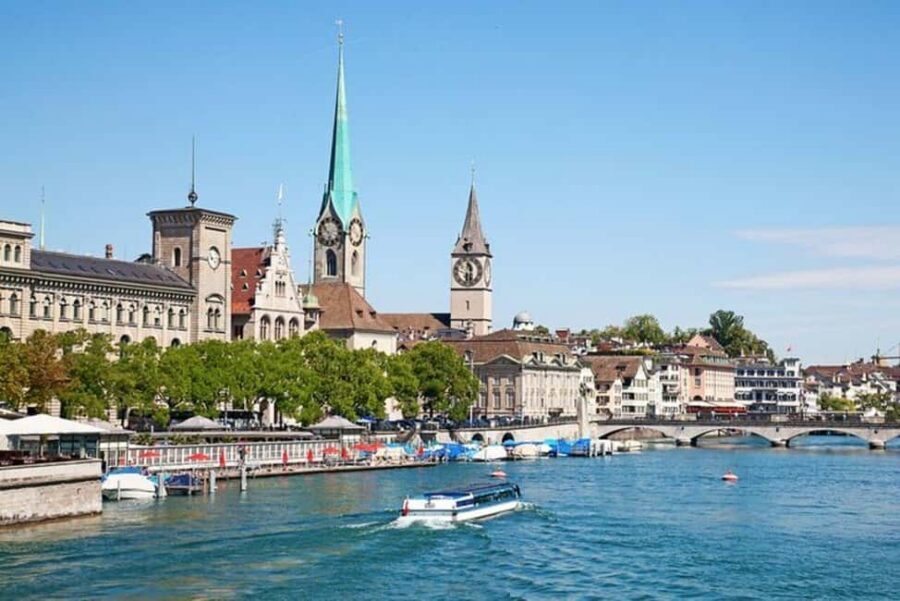
Fraumünster is where many people start to care. The reason is simple: the stained-glass Chagall Windows are the famous centerpiece.
This is more than a landmark name. It changes how you see the church. Stained glass doesn’t just sit there. It alters light and color, and it makes the church feel like it’s mid-conversation with the rest of the city.
If you get a strong guide, this stop can become the tour’s payoff. I’ve seen experiences where guides like Alexander have been praised for making the tour feel conversational and connecting religion and daily life to what you’re looking at. At Fraumünster, that kind of storytelling can help you understand why the windows matter, not just that they are famous.
Wasserkirche: underground ruins and the execution of Felix and Regula
After Fraumünster, the tour moves to Wasserkirche. This is a different mood, and that’s good for your attention span.
The tour frames Wasserkirche as a site with underground ruins and as the location tied to the execution of Felix and Regula. That combination is unusual in a walking tour—church above, ruins below, and a named historical episode that adds gravity.
If you’re the type who likes your sightseeing to have layers, this is one of the best moments in the walk. It gives you a darker, more human timeline: people lived here, worshipped here, and suffered within the city’s walls and power structures.
Lindenhof Hill: ending with ruins you can sense beneath your feet
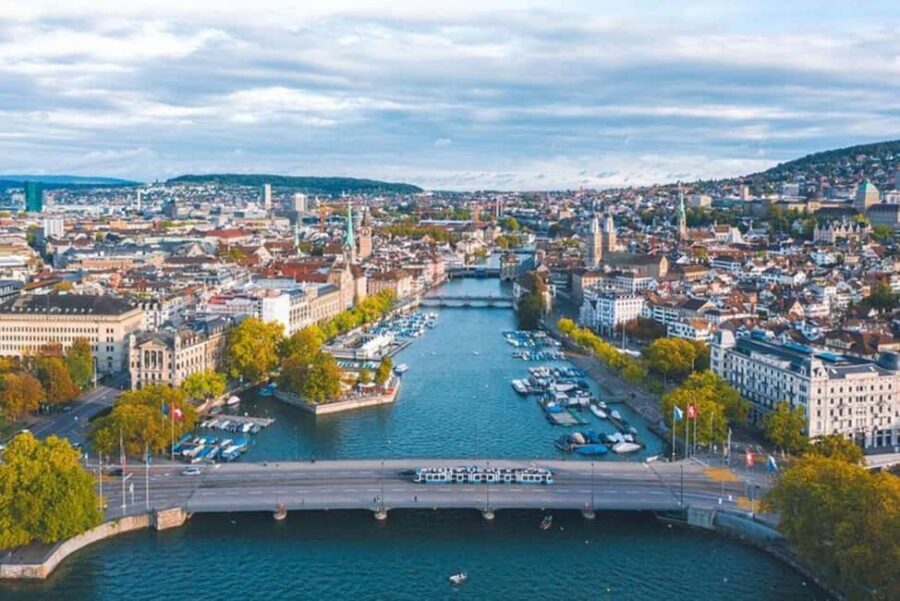
Finally, you head up to Lindenhof Hill. This is a classic Zurich viewpoint spot, but the tour’s angle is archaeological and historical. You get historical ruins underground, so you end not just with a view, but with the idea that Zurich’s present sits on top of earlier chapters.
This stop works as a tour closer because it pulls everything together. You started with a square and historic street feel. You climbed for viewpoints. You saw fortifications. You learned about religious and political history. Lindenhof Hill brings the story down to scale: the city you’re standing in now has older structures beneath you.
If your guide is good at pacing, this ending can make the whole route feel coherent rather than like a list of “must-sees.”
Price and guide quality: where value comes from (and when it doesn’t)
The listed price is $59 per person for a 2-hour guided walking tour. For Zurich, that can be reasonable, especially if your guide actually explains what you’re seeing and keeps you moving efficiently between stops like Polybahn viewpoints and the church highlights.
Still, the reviews you shared point to a real variable: guide performance and on-the-day execution. Some experiences mention late arrival, missing informational depth, or small operational issues (like being left at a tram stop without follow-up). When that happens, a walking tour can feel overpriced even if the route itself is strong.
So here’s my practical take on value:
- If you enjoy context—why Felix and Regula mattered here, what the cloister adds, how wall remnants fit into city defense—this tour has enough variety to justify the price.
- If you prefer to wander independently with only light narration, you might end up wanting more time per stop or more written material.
Your best defense is simple: ask questions early. If your guide responds with specifics (not just generalities), you’ll feel the money turn into understanding.
Best for: who will enjoy this tour most
This tour is a good fit for you if:
- You want a 2-hour Old Town orientation without turning it into a full-day plan
- You care about a mix of church art, city defenses, and street history
- You like guided explanation at key stops like Fraumünster and Wasserkirche
It’s less ideal if:
- You’re extremely sensitive to delays and want strict timing
- You hate being part of a group that moves at someone else’s pace
- You’re hoping for a deeply technical lecture at every site (the pace is brisk)
Because languages available include Spanish, Italian, English, and German, it’s also a solid option if you’d like the guide to switch from facts to conversational explanations in a language you’re comfortable with.
Should you book the Zurich Old Town Walking Tour?
Yes, if your goal is to get your bearings fast and see the biggest Old Town story beats in a compact route. The combination of Polybahn/Polyterrasse viewpoints, Fraumünster’s Chagall Windows, and Wasserkirche’s underground ruins gives you a meaningful spread of experiences for a short time.
But book with eyes open. This is a guided walk, so the guide matters. If you get a guide who keeps the flow tight and explains what’s behind the scenes, you’ll come away with more than photos. If the guide is quiet or the pacing slips, the same route can feel like a basic stroll.
If you want a simple decision rule: you’ll likely love it if you enjoy asking why and how. You might pass if you prefer to read and explore at your own speed.
FAQ
What is the duration of the Zurich Old Town Walking Tour?
The tour lasts 2 hours.
Where does the tour start?
The route starts at Mühlegasse 17, and the meeting point is near Hotel Scheuble.
How much does it cost?
The price is $59 per person.
Is the tour wheelchair accessible?
Yes, the tour is wheelchair accessible.
What languages are offered for the live guide?
The live guide is available in Spanish, Italian, English, and German.
Is there a private group option?
Yes, a private group option is available depending on what you select.
What key sights are included?
The tour includes Hirschenplatz, Polybahn and Polyterrasse ETH viewpoints, Zentralbibliothek Zürich, Brunngasse, Spiegelgasse, Grossmünster, Fraumünster (Chagall Windows), Wasserkirche (underground ruins tied to Felix and Regula), and Lindenhof Hill.
What is the tour type?
It’s a private or group walking tour, depending on the option selected, with a guide.
Is free cancellation available?
Yes. You can cancel up to 24 hours in advance for a full refund.
Is reserve & pay later available?
Yes. You can reserve your spot and pay nothing today.