REVIEW · ZURICH
The Dark Side of Zurich: Self-Guided Audio City Tour
Book on GetYourGuide →Operated by myFive · Bookable on GetYourGuide
Zurich gets dark fast, and this self-guided audio walk leans into it. I like the high-quality audio recorded by a professional speaker, and I also love the photo-based directions that help you move from stop to stop without getting lost. You’ll hear true stories tied to medieval executions and witchcraft, told in plain, listen-on-the-go style.
The main trade-off: the themes are heavy. You’re looking at torture, death sentences, and executions, and there’s no live guide to soften the edges or answer questions on the spot, so you’ll need to be comfortable following the story through your phone and headset.
If you’re up for an adult-focused, on-your-own walking tour, it’s a smart way to see major Zurich landmarks while also learning the city’s darker side in context.
In This Review
- Key Things I’d Mark on Your Map
- Paradeplatz Setup: Get Headphones Ready, Then Start Walking
- How the Audio Tour Turns Zurich Into a Story Map
- Executioners, Witchcraft Accusations, and the Places They Lived
- Fraumünster Church: Chagall’s Windows as a Contrast
- Hans Waldmann Monument: A Life, Then a Death Sentence
- Water Church and the Beheading for Faith
- Grossmünster: A Famous Landmark in the Middle of Dark Stories
- Places Where Guidance on Torturing a Witch Existed
- The Wealthy Woman Executed for Witchcraft
- Pillory, Judges, Revenge, and Peak Witch-Hunt Power
- The Square for Death-Sentence Announcements
- Drowning Memorial Plate: Remembering Executions
- The Baker, the Last Glass of Wine, and the Final Exit From Zurich
- Price and Value: $13 for 1.5–2 Hours of Serious Content
- Practical Tips for a Smoother Walk
- Should You Book This Dark Side of Zurich Audio Tour?
- FAQ
- FAQ
- Where does the self-guided tour start?
- How long is the tour?
- Do I need a live guide?
- What languages are available?
- What do I need to bring?
- Are entrance fees included for Fraumünster?
- Is the tour suitable for kids?
Key Things I’d Mark on Your Map
- Start at Paradeplatz and load the audio right away with your headphones
- Professional narration in English or Russian, so you can understand every stop
- True stories of witchcraft prosecutions and executions at real locations
- Photo-guided, step-by-step route directions to keep you oriented
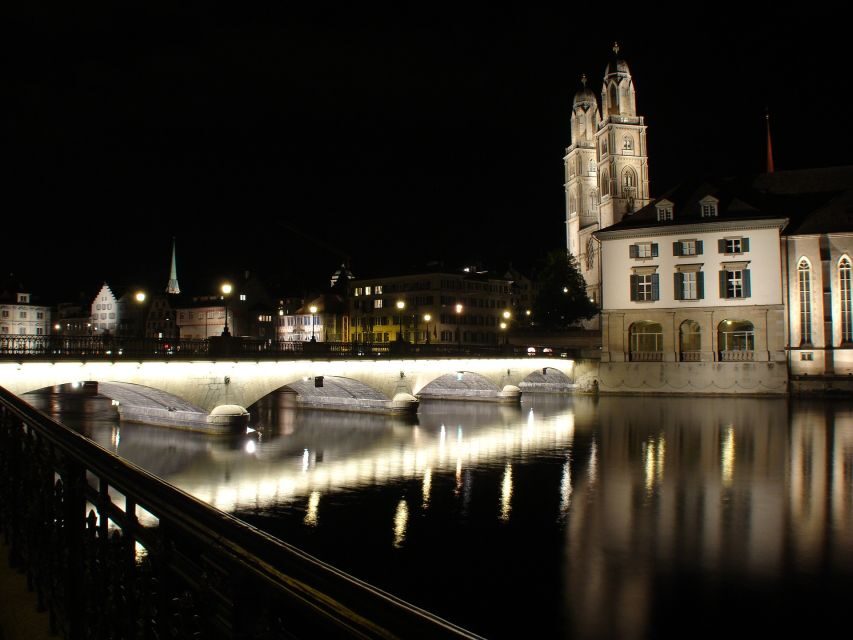
- Mix of grim legal history and major landmarks like Fraumünster and Grossmünster
- Built for 1.5 to 2 hours of walking at your own pace
Paradeplatz Setup: Get Headphones Ready, Then Start Walking
This tour begins at Paradeplatz in Zurich. Plan to arrive with everything working before you start: your smartphone charged, internet access available, and your headset plugged in and ready.
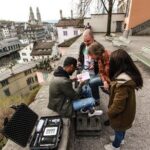
The experience is self-guided in the simplest possible way: you’ll use a link provided after booking, then follow the route by listening to the audio as you walk. There’s no live guide waiting at the starting point, so you’ll rely on your phone screen and the route photos for orientation.
If you want the smoothest start, do a quick readiness check before you press play:
- headphones in
- volume set comfortably
- internet connection stable
- your phone not on low-battery mode
Other Old Town and walking tours in Zurich
How the Audio Tour Turns Zurich Into a Story Map
What makes this audio tour work is that it doesn’t just name places. It ties each stop to a human story—medieval executions, witchcraft accusations, and the legal machinery behind it. You’re not listening to abstract history; you’re walking to the sites where sentences were announced, carried out, or discussed.
The narration is recorded by a professional speaker, which matters more than you’d think on a self-guided walk. Clear audio keeps you from missing key details while you’re turning corners, crossing squares, or checking the next photo direction.
Also, this tour is designed to be listened-to on the go. From stop to stop, the audio explains what you’re seeing and what to notice. That helps you keep the story straight, instead of treating it like a random set of grim plaques.
Executioners, Witchcraft Accusations, and the Places They Lived
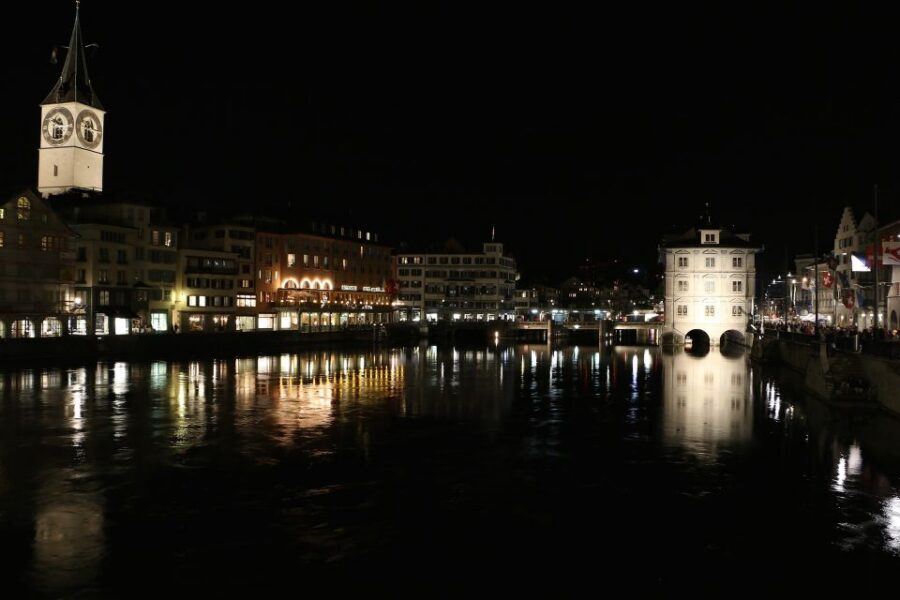
One of the tour’s strongest angles is that it connects power to ordinary city space. Early on, you head into areas where execution-related people and processes were part of Zurich life, including details like where executioners lived and even the salary they received.
Then you move to the places associated with witchcraft accusations and torture. The audio points you toward sites connected with how accused people were tortured, including the striking detail of a woman who was tortured 15 times during 26 days.
Even if you think you know witch-hunt history in broad strokes, the tour’s structure hits differently because it stays grounded in specific locations. You’re seeing Zurich as a working legal system, not a distant medieval textbook.
Fraumünster Church: Chagall’s Windows as a Contrast

After the darker subject matter, the tour pulls you toward Fraumünster. The audio includes stained glass windows by Marc Chagall, and it specifically mentions depictions tied to the crucifixion of Jesus Christ.
This is a useful moment in the route. It doesn’t erase the grim material—it gives your brain a visual and emotional reset. You’ll go from stories of punishment and fear to a major religious-art stop in one of Zurich’s best-known church settings.
One practical note: entrance fees to Fraumünster are not included, so if you plan to go inside to see the windows, budget for that separately. If you only stand outside, you’ll miss the “window” part of the narration.
Hans Waldmann Monument: A Life, Then a Death Sentence
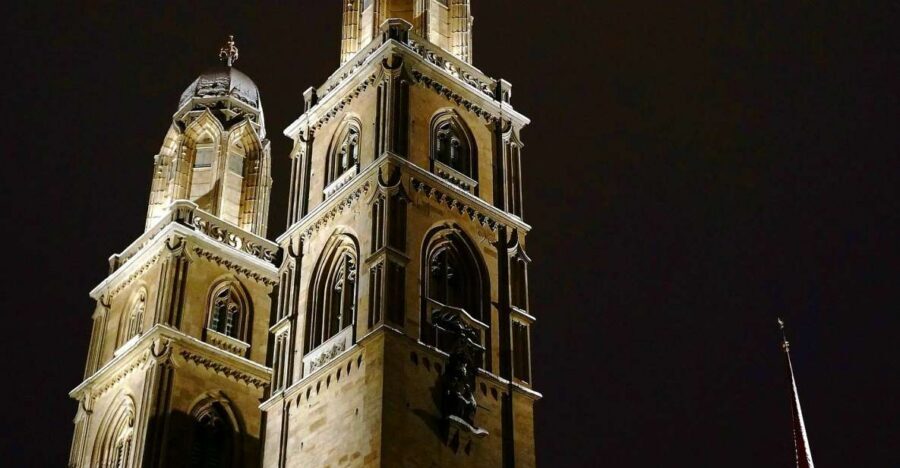
Next, the tour focuses on Hans Waldmann, with a stop at a monument tied to his execution in 1489. The audio gives you his life story and his end in Zurich, turning a name you may recognize into something more concrete.
What I like about this kind of biographical stop is that it makes the legal history feel personal. You’re not just hearing about procedures; you’re listening to what happened to one identifiable person and why the city marked him as a lesson.
You’ll also get a sense of how Zurich remembered people afterward—by putting monuments in places you can still walk past today.
Other city bus and sightseeing tours in Zurich






Water Church and the Beheading for Faith
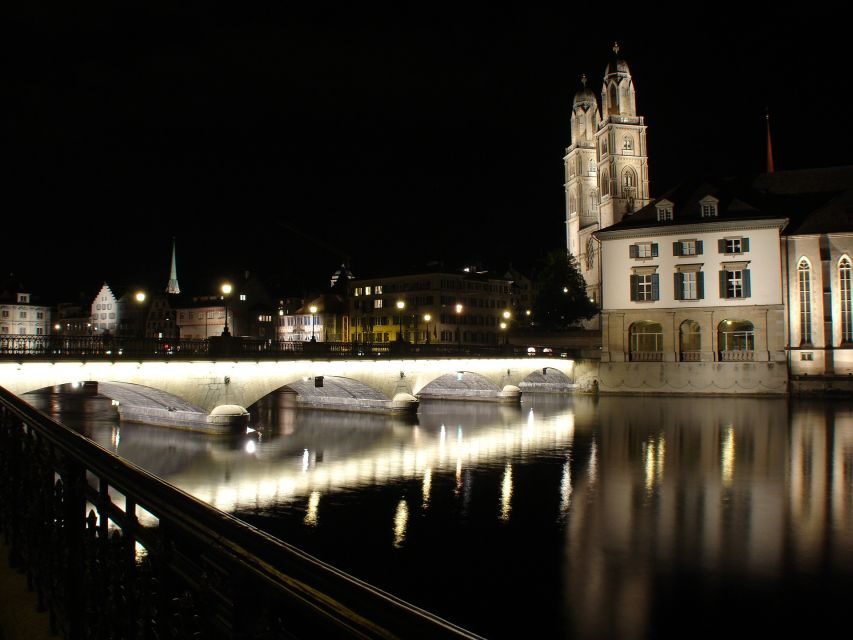
The route continues to the Water Church, where the audio tells the story of a brother and sister who were beheaded for their faith.
This is another stop that clarifies the religious stakes behind medieval prosecutions. Even when the tour turns to witchcraft, it’s showing you how accusations often blended morality, religion, and law.
The key practical value here: you’re getting multiple angles on punishment across different categories—witchcraft accusations, faith-based convictions, and broader execution culture. That makes the tour feel more complete as you move through town.
Grossmünster: A Famous Landmark in the Middle of Dark Stories

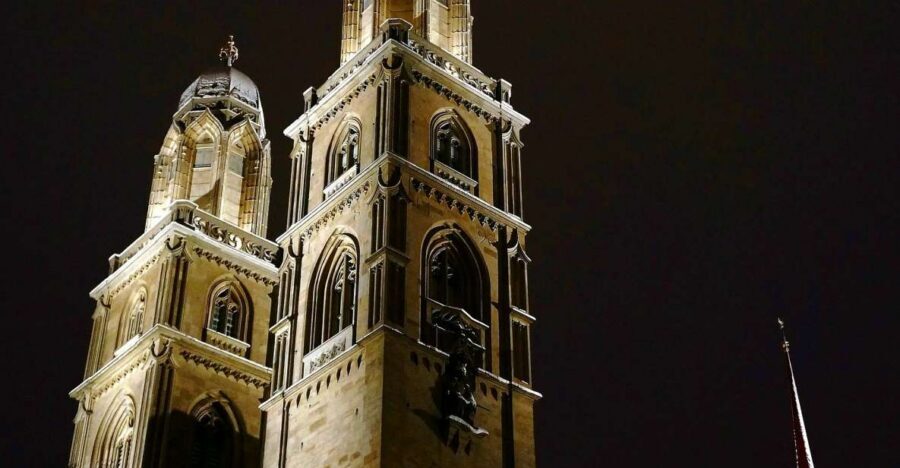
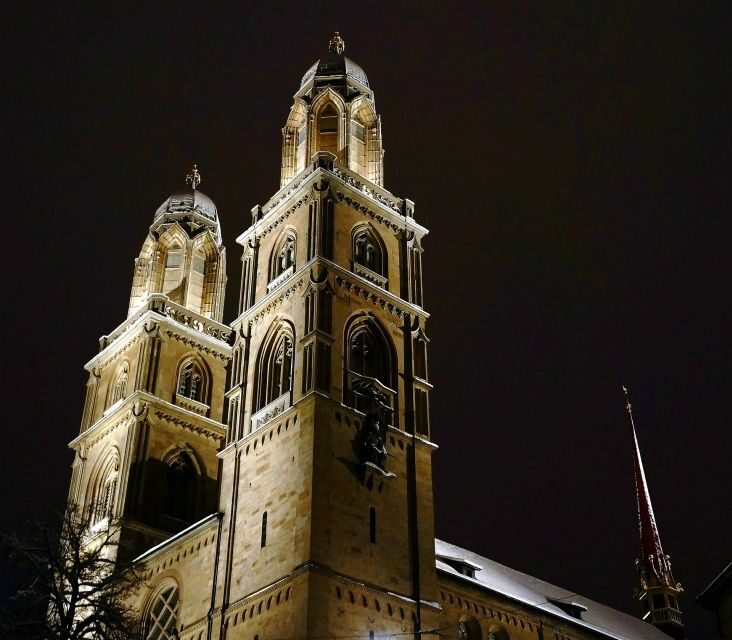
You’ll also visit the Grossmünster. The tour describes it as one of Zurich’s most famous landmarks, and that’s exactly why it belongs in this route.
When you mix a major landmark with serious historical storytelling, you see the city differently. You can look at the church façade like a postcard image, then immediately hear how the area connects to medieval legal realities. It’s a reminder that the Zurich you enjoy walking around is built on layers of conflict and control.
If you like “big sight + specific story” pairings, this part of the tour is satisfying.
Places Where Guidance on Torturing a Witch Existed
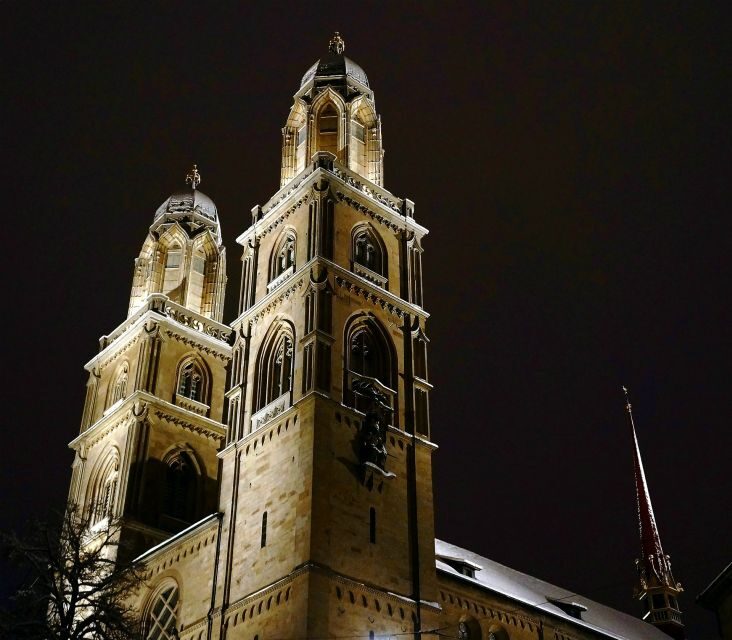
One of the most disturbing segments is about the knowledge behind the violence. The audio directs you to a location connected with guidance on how to recognize and torture a witch.
That’s an important shift in perspective. It’s not only about what happened to victims. It’s also about how systems taught people to make accusations and justify torture.
This part of the tour is also where headphones really earn their keep. You’ll want the narration for the nuance: what the guidance was tied to, and how it fits into the broader prosecution environment.
The Wealthy Woman Executed for Witchcraft
The route then moves to the house of a wealthy Zurich woman who was executed for witchcraft. Hearing that a wealthy person was involved changes how you picture these prosecutions. This wasn’t only about the powerless.
By placing the story at a residential-type stop, the audio makes a simple but powerful point: accusations and executions could reach into everyday social life, not just courtrooms.
Pillory, Judges, Revenge, and Peak Witch-Hunt Power
You’ll also pass the former place of the pillory, another sign that public punishment was visible in city life.
Then the tour takes you to the house of a judge who worked during the peak time of the witch-hunt. The audio includes the story of his revenge—so you get not just legal process, but the human emotions tied to it.
This section works best if you listen carefully to the transitions. The audio is steering you from one type of authority to another: execution systems, accusation systems, punishment display systems, and judicial power. The result is a clearer picture of how Zurich functioned during a witch-hunting era.
The Square for Death-Sentence Announcements
At another stop, the audio points out the square where death sentences were announced.
That’s one of the most chilling ideas in the whole experience: you’re not only hearing about execution. You’re learning that condemnation had a public moment—something people could witness as part of the city’s rhythm.
If you’re visiting on a sunny day, this is where you’ll feel the contrast the most. You’re standing in a normal public space while the audio describes a moment built around fear.
Drowning Memorial Plate: Remembering Executions
The tour includes a memorial plate at the site where people were executed by drowning.
This is the part that leans toward remembrance rather than details. It’s still difficult material, but the memorial nature gives you a chance to pause and reflect without needing to picture every step of what happened.
If you’re sensitive to graphic themes, this is a good moment to step slowly, take in the plaque, and then decide how you want to continue listening through the remaining stops.
The Baker, the Last Glass of Wine, and the Final Exit From Zurich
Near the end, the audio takes you to the house where the baker who gave people their last glass of wine lived.
That’s a human detail, and it lands in a different emotional register than the rest of the tour. It brings the story down from systems and sentences into kindness, ritual, and the final moments before punishment.
After that, you’ll learn about the place where people going to executions exited the city, and understand where they were burned and hanged.
This final movement gives the route closure in a physical way. You’re following the condemned from the announcement space through the wider city story and toward the departure point—where the legal outcome became irreversible.
Price and Value: $13 for 1.5–2 Hours of Serious Content
At $13 per person, the biggest value here isn’t a discount. It’s the format. For a low entry fee, you’re buying a structured walking route plus a high-quality audio guide with photos and detailed directions.
For many audio tours, the narration is the main cost. Here, the narration is professional, and the route support (photos + directions) matters because it reduces the stress of figuring things out on your own.
You’re also getting a strong length of time for the money: about 1.5 to 2 hours. If you can handle the heavy topics, that’s enough time to experience multiple major story sites and key Zurich landmarks without turning it into a half-day commitment.
Where the price might not feel like value is if you:
- dislike walking tours
- have spotty internet access
- strongly prefer a live guide for Q&A and gentle pacing
Practical Tips for a Smoother Walk
The tour is straightforward, but it has a few “make-or-break” details because it’s self-guided.
Bring:
- Headphones
- Charged smartphone
- Internet access
You might find it helps to:
- start right at Paradeplatz, before you drift into side streets
- keep your phone brightness up so photo directions are readable
- move at a steady pace so you don’t have to rewind the audio every time you stop
Also, keep in mind the tour is not suitable for children under 16, which tells you the tone you should expect.
Should You Book This Dark Side of Zurich Audio Tour?
I’d book it if you want a walking tour that’s more than “pretty buildings and quick facts.” This one gives you a guided way through serious material—executions, witchcraft prosecutions, public condemnation spaces, and memorial sites—while still moving past major Zurich landmarks like Fraumünster and Grossmünster.
Skip it if you want a light, casual city wander, or if you’re uncomfortable handling stories involving torture and executions. And if your phone signal or battery is usually unreliable, I’d treat this as a tour that needs a bit of prep.
If you’re the type of traveler who likes hearing the real layers of a city—good, bad, and unsettling—then this is a strong use of your time in Zurich.
FAQ
FAQ
Where does the self-guided tour start?
It starts at Paradeplatz in Zurich. You’ll begin there and use your headphones to follow the audio route.
How long is the tour?
The experience is designed for about 1.5 to 2 hours.
Do I need a live guide?
No. There is no live guide. You’ll explore using the internet link provided after booking.
What languages are available?
The audio guide is available in English or Russian.
What do I need to bring?
Bring headphones, a charged smartphone, and internet access.
Are entrance fees included for Fraumünster?
No. Entrance fees to the Fraumünster church are not included.
Is the tour suitable for kids?
No. It is not suitable for children under 16. It is also not suitable for wheelchair users.