REVIEW · ZURICH
Self-Guided Audio Tour to the Dark Side of Zurich
Book on Viator →Operated by myFive · Bookable on Viator
A witch hunt theme makes Zurich feel oddly personal. This self-guided audio route strings together real city corners tied to trials, executions, and the people who carried them out. I like that it’s easy to follow on foot with photos and clear directions, and the narration is recorded by a professional speaker with a deep voice. One heads-up: the subject matter is heavy, and if you’re sensitive to human-rights topics, the tone may feel too grim.
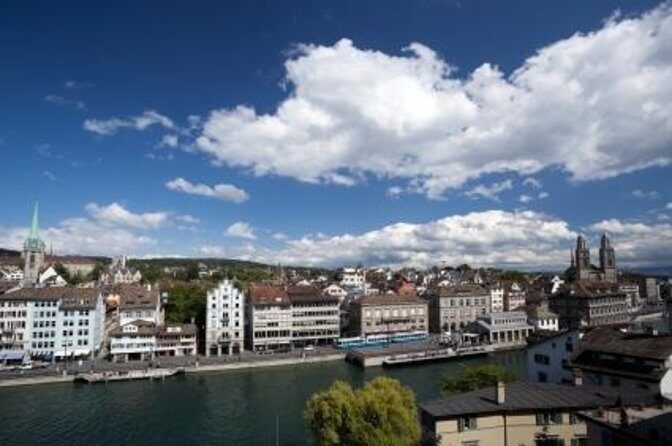
I also like that the tour doesn’t ask you to sit in a museum. You walk between meaningful stops like Paradeplatz, the Limmat, and the Wasserkirche, picking up context as you go. The route ends at Herkulesbrunnen, where the condemned supposedly left the city, which gives the walk a strong finish. The main drawback is practical: you’ll need your own mobile phone with internet and headphones, and if your connection is slow the audio link may take time to load.
In This Review
- Key highlights if you want the “dark side” of Zurich
- Price and value: what $13.22 buys you
- How the self-guided format really works (and what to bring)
- The route at street level: what each stop gives you
- Stop 1: Paradeplatz and the executioner’s world
- Stop 2: Börsenstrasse and what people really wanted
- Stop 3: Limmat and Elsbeth’s story
- Stop 4: Fraumunster Church and Marc Chagall’s stained glass
- Stop 5: Hans Waldmann statue and a life ending in 1489
- Pass-by: Grossmünster and Reformation-era symbolism
- Stop 6: Wasserkirche and Felix and Regula
- Stop 7: Kirchgasse and guidance on witch recognition and torture
- Stop 8: Untere Zäune and a wealthy woman’s execution
- Stop 9: Neumarkt and the pillory
- Stop 10: Obere Zäune and a judge’s revenge
- Stop 11: Zürich Town Hall and medieval prosecution processes
- Stop 12: Täufergedenkplatte and executions by drowning
- Stop 13: Rennweg and the last sip
- Stop 14: Herkulesbrunnen and leaving the city
- Who this tour suits best
- The experience you’re paying for: clarity, pacing, and narration
- Practical tips for a smoother walk
- Should you book it?
- FAQ
- Is the tour self-guided or do I need to meet a live guide?
- How long does the Zurich dark side audio tour take?
- What language is the audio offered in?
- How much does the tour cost?
- Where do I start and where does the tour end?
- Do I need internet on my phone during the tour?
- Is a mobile ticket included?
- Is Fraumunster Church included?
- Is this tour private?
- Are service animals allowed?
- Can I get a full refund if I cancel?
Key highlights if you want the “dark side” of Zurich
A tight 1–2 hour walking route focused on witch hunts and executions
English audio recorded by a professional narrator with a deep voice
Photo-based, turn-by-turn style directions to keep you from wandering
Historic stop sequence from Paradeplatz to Herkulesbrunnen, plus a stop-pass by Grossmunster
One optional paid interior: Fraumunster Church entry costs CHF 5
Works best with a good internet connection since it’s not downloaded offline
Price and value: what $13.22 buys you
At $13.22 per person for about 1–2 hours, this is priced like a small, focused “learning add-on” to a Zurich day. You’re not paying for a live guide’s time. You’re paying for an audio experience that tells you what you’re seeing while you’re walking—so you get more meaning per block than you would with an app that just lists sights.
In my view, the value depends on how you like to travel:
- If you enjoy walking at your own pace and reading the city through a story, it’s a good deal.
- If you prefer broader sightseeing with lots of casual stops, the heavy theme may feel like a one-note evening.
Also plan for the one optional cost. If you want to go inside Fraumunster Church to see the stained-glass windows, there’s an entrance fee of CHF 5 per person that’s not included.
Other Old Town and walking tours in Zurich
How the self-guided format really works (and what to bring)
This is a private activity for your group only, with no live guide meeting you on the street. After you book, you’ll get a link you use on your phone. The tour gives a route with photos and directions, and the audio narration plays as you move between stops.
That means your “tour quality” depends on your setup. Bring:
- Your own mobile phone
- Headphones (so you can hear clearly on busy streets)
- Internet/data for the audio link to work properly
One practical lesson: don’t rely on hotel Wi‑Fi that’s overloaded. If your connection is weak, the audio link can load slowly. I’d give yourself a little buffer before the first stop so you’re not troubleshooting while you’re trying to enjoy the walk.
The route at street level: what each stop gives you

The walk is structured as short segments—each stop is roughly five minutes plus the street transitions between them. That keeps the story moving, and it also means you’re not stuck in one place for long.
Stop 1: Paradeplatz and the executioner’s world
You begin at Paradeplatz, Zurich’s central square and an easy place to orient yourself. The audio points you toward the city’s unsettling link between power, law, and punishment. Here, the story focuses on a Zurich executioner’s residence and what their work looked like—plus the training behind the role.
Why this works: starting in a major public square makes the dark theme feel less like folklore and more like something that once sat right in everyday life.
What to consider: if you arrive rushed or distracted, you might miss the nuance of the executioner’s “profession” framing. This stop sets the emotional tone.
Stop 2: Börsenstrasse and what people really wanted
Next you walk down Börsenstrasse, where the audio shifts to the medieval executioners who once lived there. This segment focuses on the most common execution methods, how often these events happened, and even the executioner’s salary.
Why it matters: it’s not only about horror. It’s about how a system ran—money, routines, and the darker mechanics of authority.
Possible drawback: some listeners prefer less listing of details and more scene-setting. If you’re the type who wants fewer facts and more atmosphere, keep an open mind for this stop’s “how the system worked” style.
Other guided tours in Zurich


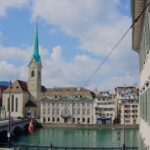
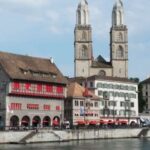

Stop 3: Limmat and Elsbeth’s story
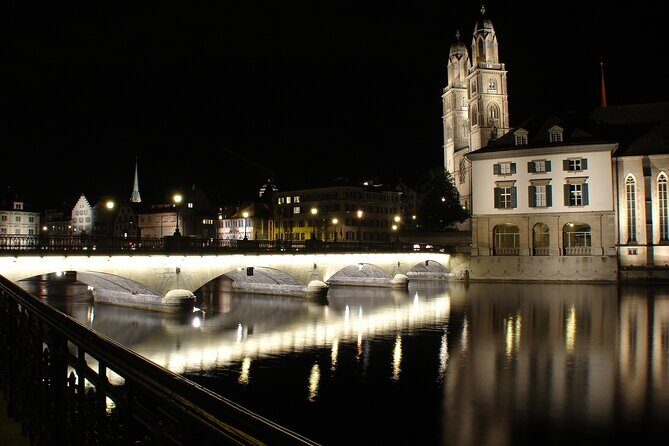
At the Limmat, the walk turns personal. The narration connects you to stories of tortured witches of Zurich, including Elsbeth—described as enduring fifteen days of torment.
Why you’ll remember it: a named person and a specific timeline make the story stop feeling abstract.
What to consider: this is where the content is at its most emotionally intense. If you’re sensitive to human-rights topics, this part can feel heavy.
Stop 4: Fraumunster Church and Marc Chagall’s stained glass
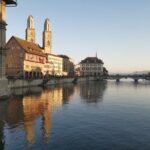
Then you reach Fraumunster Church, one of Zurich’s most recognizable landmarks. The audio gives you the backdrop of its Marc Chagall stained-glass windows depicting the crucifixion of Jesus Christ.
Important: entry to see the windows inside is not included. You can choose to view the exterior from outside without paying the fee, but the interior experience is a key add-on if you want the full payoff.
Why it’s worth it: religious art here isn’t random decoration. It’s a contrast point—Christian symbolism in a city that also staged punishment under religious authority.
Stop 5: Hans Waldmann statue and a life ending in 1489
Your next landmark is the Hans Waldmann statue, erected in memory of a historical figure executed in 1489. The audio walks you through the story of his extraordinary life and his demise.
Why this helps: Waldmann’s case gives the narrative a “local-history” anchor. It’s not only anonymous victims and nameless officials.
Consideration: statues are sometimes just photo stops. Here, the audio turns the statue into a prompt for a real story.
Pass-by: Grossmünster and Reformation-era symbolism
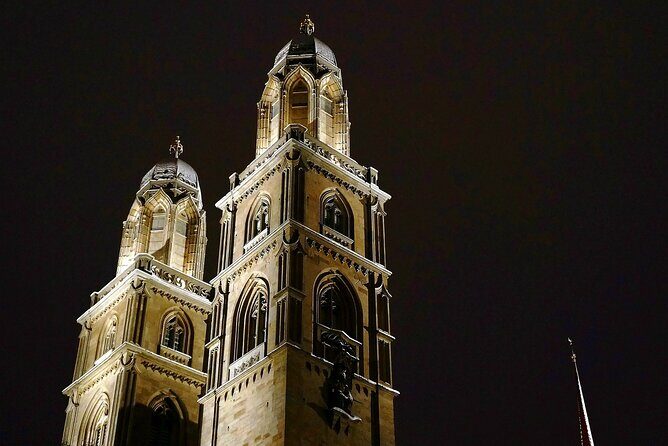
As you continue, you pass by Grossmünster, described as a symbol of the Swiss-German reformation and a cornerstone of Zurich heritage.
Why it belongs: it helps you connect the witch-hunt period to bigger religious and political shifts. You’re not only hearing about trials—you’re seeing how Zurich’s identity was shaped by belief and authority.
Stop 6: Wasserkirche and Felix and Regula
At the Wasserkirche (the Water Church), the narration tells the legend of Felix and Regula, beheaded for their Christian beliefs.
Why this matters: it gives you another religious strand in Zurich’s story—saints, martyrdom, and the idea of faith leading to punishment. That contrast makes the later witch-trial content hit harder.
Stop 7: Kirchgasse and guidance on witch recognition and torture
In Kirchgasse, the audio focuses on old instructions connected to witch recognition and torture. This is the “how it was justified” portion of the walk.
Why it’s chilling: it’s not presented as distant medieval drama. It’s presented as a set of methods people used.
What to consider: you’ll likely feel uncomfortable here. That discomfort is part of what makes the tour memorable.
Stop 8: Untere Zäune and a wealthy woman’s execution
At Untere Zäune, you hear about the residence of a wealthy woman executed for witchcraft, including the gripping outline of her life story.
Why it’s important: witchcraft accusations weren’t always aimed at outsiders. The audio signals that status didn’t protect people.
Stop 9: Neumarkt and the pillory
At Neumarkt, the audio identifies the former place of the pillory.
Why this is useful: executions are the headline. But the pillory shows the broader punishment system—humiliation and control before (or instead of) the worst outcomes.
Stop 10: Obere Zäune and a judge’s revenge
At Obere Zäune, the narration points to the house of a judge working during the peak of the witch-hunt and includes a revenge story connected to that figure.
Why you’ll appreciate it: it ties official power to personal motives, which can make the history feel less like a machine and more like people making choices.
Stop 11: Zürich Town Hall and medieval prosecution processes
Then you reach Zürich’s Town Hall, where the audio explains medieval prosecution processes and references the square where death sentences were pronounced.
Why this stop clicks: it’s one thing to hear about executions. It’s another to connect them to the legal theater of a city government.
What to consider: if you want mostly outdoor walking and minimal formal-history talk, this is where the narration can feel more “system-focused.”
Stop 12: Täufergedenkplatte and executions by drowning
At the Täufergedenkplatte memorial plate, the audio reminds you of executions by drowning.
Why this matters: it broadens your mental map of what punishment looked like. It’s not only burning or hanging in this story.
Stop 13: Rennweg and the last sip
In Rennweg, you explore the house of a baker tasked with providing the last sip to those bound for execution.
This is one of those details that makes the tour stick in your memory. It shows how ordinary tradespeople could be pulled into the machinery of punishment, even if they were not the ones sentencing people.
Stop 14: Herkulesbrunnen and leaving the city
Finally, the route ends at Herkulesbrunnen. The audio explains that this was where the condemned exited the city, and it also brings together how and where burnings and hangings took place.
Why this ending works: the story has direction. You start in a central public square and finish at a symbolic “departure” point—like the city’s border between everyday life and punishment.
Who this tour suits best

This self-guided audio tour is best for you if:
- You like walking and learning city context block by block.
- You want a focused Zurich theme beyond the usual postcard sights.
- You prefer clarity and a mapped route with photos rather than wandering on vibes.
It’s less ideal if:
- You get queasy about torture, executions, and witch-hunt narratives.
- You want lots of modern Zurich sightseeing. This one stays anchored in the darker chapters.
Also, it’s easy to fit into a trip schedule because it’s only about 1–2 hours. That makes it a strong option for a morning stroll or a late-afternoon walk before dinner.
The experience you’re paying for: clarity, pacing, and narration
A big plus is the way the audio is produced and structured. The narration is professionally recorded with a deep voice, and the tour comes with clear directions and photos—so you spend less time guessing.
The pacing also helps. Because each stop is short, you can keep moving even if you’re stopping for photos, or if you just need to step aside around crowds.
On the other hand, the theme is intense and the audio includes factual lists in places (including details like methods, frequency, and salaries). If you want story-driven scenes only, you might find some sections feel a bit “catalog-like.”
Practical tips for a smoother walk
- Start early enough that you can check the audio link without rushing.
- Use headphones so you can hear the narrator clearly on busy streets.
- If you plan to go inside Fraumunster, budget CHF 5 per person for the church entry.
- If you know you’re sensitive to human-rights topics, decide ahead of time whether this is your right kind of history. This tour doesn’t soften the subject.
Should you book it?
Book this Self-Guided Audio Tour to the Dark Side of Zurich if you want a clear, walkable way to understand how Zurich’s public spaces connect to witch hunts, trials, and executions. It’s great value for the time, and the route guidance plus professional narration makes it easy to get meaning from the streets instead of just passing by them.
Skip it if you want a lighter first-time Zurich overview, or if the topic is likely to weigh on you. The content is genuinely dark, and it’s designed to make you think—not just to entertain.
FAQ
Is the tour self-guided or do I need to meet a live guide?
It’s self-guided. After booking, you use the provided link on your phone to access the audio. There’s no live guide.
How long does the Zurich dark side audio tour take?
It takes about 1 to 2 hours.
What language is the audio offered in?
The tour is offered in English.
How much does the tour cost?
The price is $13.22 per person.
Where do I start and where does the tour end?
The start is Paradeplatz, 8001 Zürich and the tour ends at Herkulesbrunnen near Bahnhofstrasse, 8001 Zürich.
Do I need internet on my phone during the tour?
Yes. You’ll need your own mobile phone with internet and a headset.
Is a mobile ticket included?
Yes, a mobile ticket is included.
Is Fraumunster Church included?
Fraumunster Church is a stop on the route, but admission is not included. If you want to see inside, there is an entrance fee of CHF 5 per person.
Is this tour private?
Yes. It’s private, so only your group participates.
Are service animals allowed?
Yes, service animals are allowed.
Can I get a full refund if I cancel?
Yes. You can cancel up to 24 hours in advance for a full refund. If you cancel less than 24 hours before the start time, the amount paid is not refunded.