REVIEW · ZURICH
Zurich in the Mirror of the Past: Self-Guided Audio Tour
Book on GetYourGuide →Operated by myFive · Bookable on GetYourGuide
Zurich has a way of turning corners into stories. This self-guided audio route strings together the city’s biggest sights with names and moments you don’t usually hear on standard sightseeing. I especially like the high-quality English audio and the fact that the route comes with photos and clear directions you can follow on your phone. One thing to consider: there’s no live staff on-site, so if you expect help like a normal info desk, you’ll need to rely on the link you get after booking.
Plan on using your smartphone like a guidebook. You’ll start at Bahnhofplatz and wander at your own pace for about 2 to 2.5 hours, listening through major landmarks such as Grossmünster and Fraumünster, civic buildings, historic houses, and stops tied to people who shaped Zurich for good and bad. I think it’s a smart buy for $13 if you’re comfortable navigating streets with your phone in hand.
In This Review
- Key highlights at a glance
- Why Zurich makes a good match for an audio walking tour
- Starting at Bahnhofplatz: setting yourself up to succeed
- Old Town religious landmarks: Grossmünster, Fraumünster, and the church circuit
- Civic Zurich: City Hall and the Opera House stop you in your tracks
- Lindenhof: the viewpoint moment that makes history feel real
- Walking into big addresses: Paradeplatz and Bahnhofstrasse
- Culture and controversy in the center: Cabaret Voltaire and Lenin’s House
- Roman Baths: one stop that adds depth fast
- Monuments you can’t ignore: Alfred Escher, Pestalozzi, Zwingli, Waldmann
- Public art moments: Ganymed and Pavilion
- Guild buildings: Millers, Bakers, Salt and Spice Merchants, and the Masonic Lodge
- Urania Observatory: a practical science-style pause
- Route navigation: using the phone link and avoiding common hiccups
- Timing: what 2 to 2.5 hours feels like in practice
- Who this audio tour is best for
- Price and value: is $13 worth it?
- Final verdict: should you book this Zurich audio tour?
- FAQ
- Where does the tour start?
- Do I need a live guide?
- What language is the audio guide in?
- How long does the tour take?
- What do I need to bring with me?
- What’s included in the price?
- Is the tour suitable for wheelchair users?
- Is there a cancellation option?
- How long is the tour available after purchase?
- Is reserve and pay later available?
Key highlights at a glance
- Recorded audio by a professional speaker in English
- Route instructions with photos and detailed directions
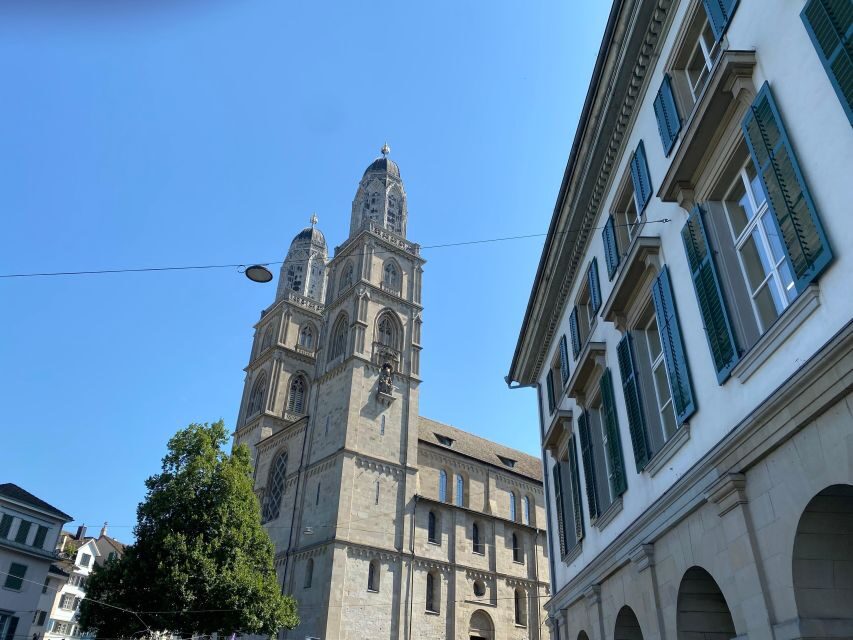
- Covers major Zurich icons like Grossmünster, Fraumünster, St. Peter’s Church, and Water Church
- Adds the less-obvious stops like Cabaret Voltaire, Lenin’s House, and Urania Observatory
- Includes public art and monuments like Ganymed, Pavilion, and statues for Zwingli and Pestalozzi
Why Zurich makes a good match for an audio walking tour
Zurich is the kind of city where you can “see” a lot without learning much—unless you attach context. That’s exactly where this experience helps. Instead of just dropping you in front of postcard-famous spots, the audio gives you a storyline built around the people who lived here and the decisions they made.
The format also works well in a place where strolling is part of the point. In about 2 to 2.5 hours, you can cover a serious chunk of the center at a pace that fits you. If you’re the type who hates getting swept along by a group schedule, the self-guided setup is a plus. Your phone becomes the conductor.
The big trade-off is that this is not a guided walkthrough. There’s no live commentary to correct you if you take the wrong street. The audio route does include directions, but you’ll want your phone charged and ready.
Other Old Town and walking tours in Zurich


Starting at Bahnhofplatz: setting yourself up to succeed

You begin at Bahnhofplatz in Zurich. This matters because it puts you at the city’s most connected starting point—easy to reach whether you come by train or on foot from nearby hotels.
From there, the route is designed to lead you through recognizable clusters: old churches and medieval-feeling streets, civic squares, museums and cultural addresses, then out toward the shopping spine. You’re not just chasing random landmarks. The stops are tied together so you’re always walking through a reason, not just a list.
Practical tip: keep your headphones in place early. If you take them on and off while you’re trying to orient yourself, you’ll lose the flow of the story.
Old Town religious landmarks: Grossmünster, Fraumünster, and the church circuit
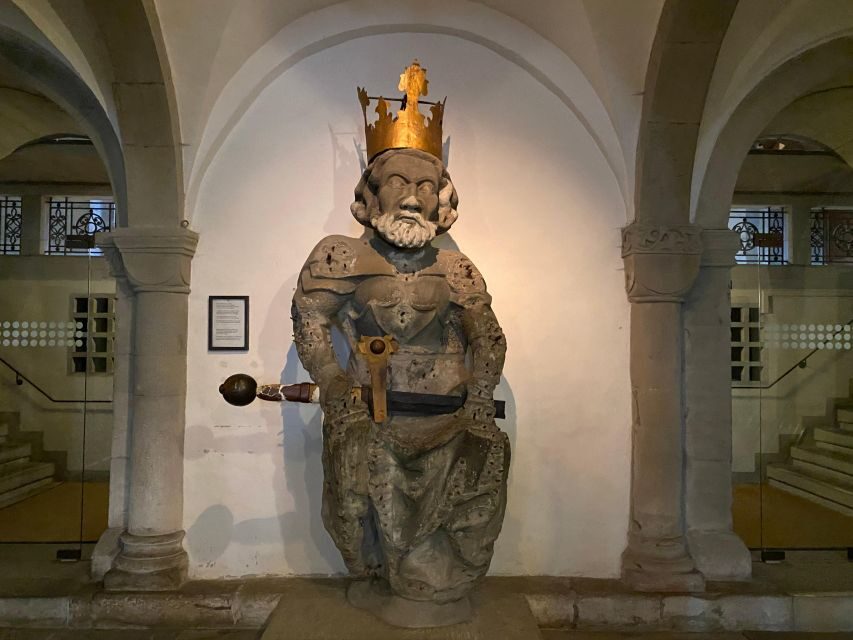
A big chunk of this tour focuses on major church buildings, and that’s a smart use of time. Churches in Zurich aren’t only about architecture. They’re anchor points for how the city organized power, beliefs, and public life.
Here are the key stops you’ll hit:
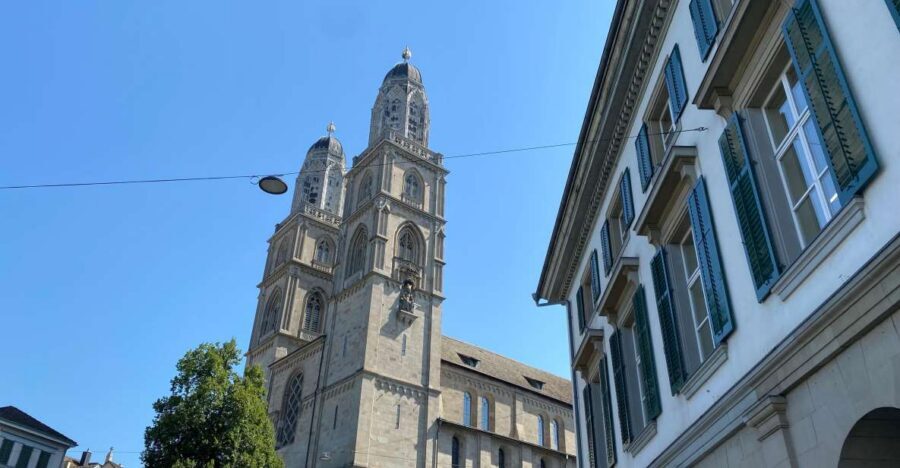
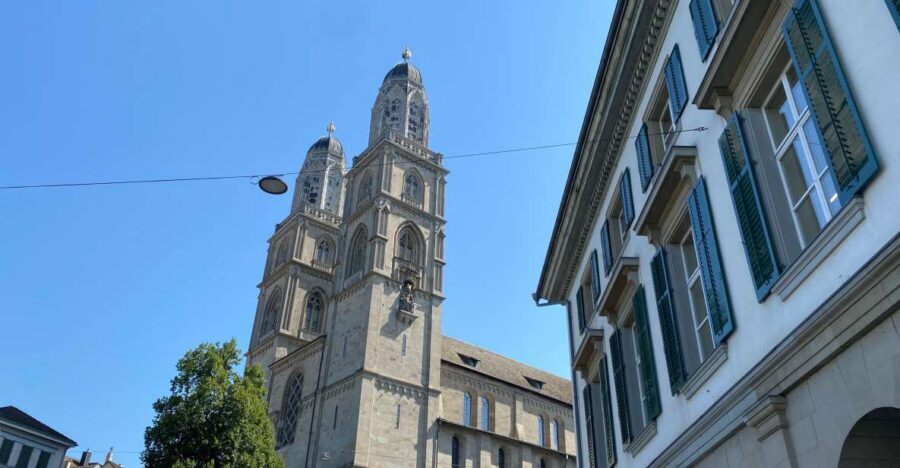
- Grossmünster: one of Zurich’s most iconic silhouettes, impossible to miss once you know it’s part of the route.
- Fraumünster: another landmark name that helps you map the historic center quickly.
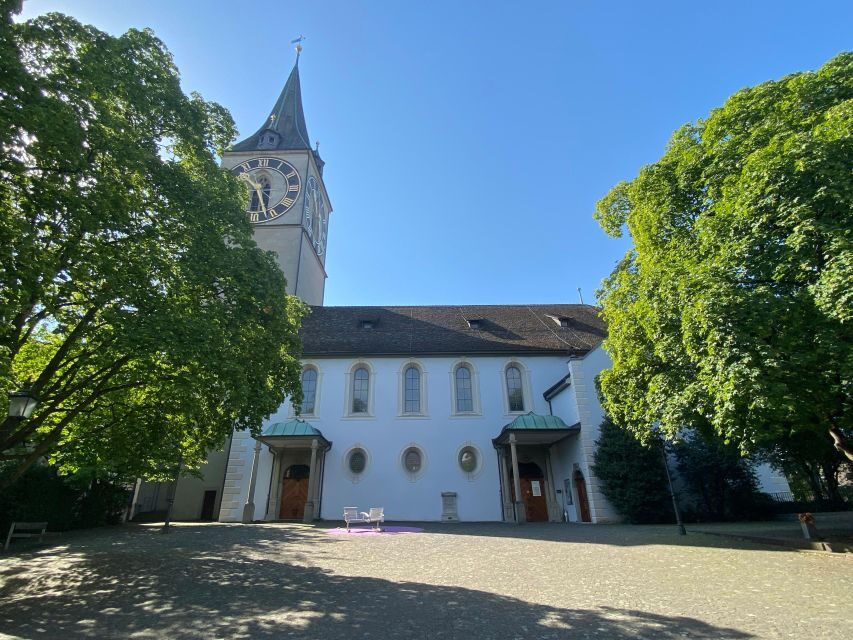
- St. Peter’s Church: a standout for scale and atmosphere when you’re standing there in person.
- Water Church: a reminder that even “small” landmarks often connect to real urban functions, not just decoration.
Why this works: when the audio ties each place to past inhabitants and critical moments, the churches stop being background scenery. You start seeing them as places where decisions got announced, supported, argued over, or challenged.
Small drawback: church exteriors are easy to interpret with audio, but if you want to go inside, you’ll need to plan extra time. The experience is built around an outdoor walking route in a set window.
Civic Zurich: City Hall and the Opera House stop you in your tracks
Zurich’s civic buildings help you understand how the city runs. This tour includes Zurich City Hall and the Opera House, and they add a different flavor than the religious sites.
City Hall gives you the practical Zurich story: where authority meets ceremony. The Opera House shifts the mood toward culture and public taste, showing how the city invests in arts while still staying tightly governed.
If you’re someone who likes your sightseeing to explain why a place matters, these two stops do that well. They also offer great photo moments because they sit in view-friendly areas.
Lindenhof: the viewpoint moment that makes history feel real

Lindenhof is one of those Zurich spots that works even when you don’t have a plan. On this route, it becomes more than a scenic pause. The audio uses places like this to connect old Zurich to what you’re seeing from where you’re standing.
Why it’s worth your time: viewpoints are where your brain finally organizes the city. You see how the river, neighborhoods, and major streets connect. Then the stories attached in the audio make more sense.
Practical move: don’t just snap one picture and rush. Give yourself one or two minutes to look around, then press play again.
Other guided tours in Zurich



Walking into big addresses: Paradeplatz and Bahnhofstrasse
Once you reach Paradeplatz and Bahnhofstrasse, the tour shifts into Zurich’s modern identity—finance, commerce, and the street-level version of city planning.
This portion is useful if you’re worried the audio will feel too academic or too church-focused. The tour uses these areas to show Zurich as a living place, not a museum. You’ll also start noticing how quickly major Zurich life concentrates in the center.
Value angle: it’s easy to overpay for city tours that only “show you places.” This one aims to explain why those places sit where they do and what kind of city they represent.
Culture and controversy in the center: Cabaret Voltaire and Lenin’s House

Two of the most interesting stops on the tour are Cabaret Voltaire and Lenin’s House. They’re not just famous addresses. They’re signals that Zurich has hosted big ideas, radical movements, and political stories that never stayed politely in the background.
Cabaret Voltaire connects to the city’s reputation for arts and provocative thinking. Lenin’s House brings a sharper historical edge, reminding you that international politics has intersected with Zurich more than once.
This is also where the tour’s promise of sensitive topics shows up. The audio doesn’t only offer feel-good history. It includes stories of people making bold choices, preventing bloodshed, executing innocents, fighting for power, and helping children. That’s a heavy mix for a walking tour, but it’s also part of what makes Zurich history feel human.
If you want only light and pretty stories, this might feel intense in places. If you like history that doesn’t look away, it’s one of the strongest parts.
Roman Baths: one stop that adds depth fast
The Roman Baths are the kind of feature that makes your walking route feel suddenly older—like you’ve gone farther back than you expected. You’re not just seeing medieval Zurich. You’re seeing earlier layers that help explain why the city grew where it did.
Short pause here is time well spent. Even if you know Roman history in general, standing in the presence of a site like this with an audio explanation helps you connect the dates to the streets around you.
Monuments you can’t ignore: Alfred Escher, Pestalozzi, Zwingli, Waldmann
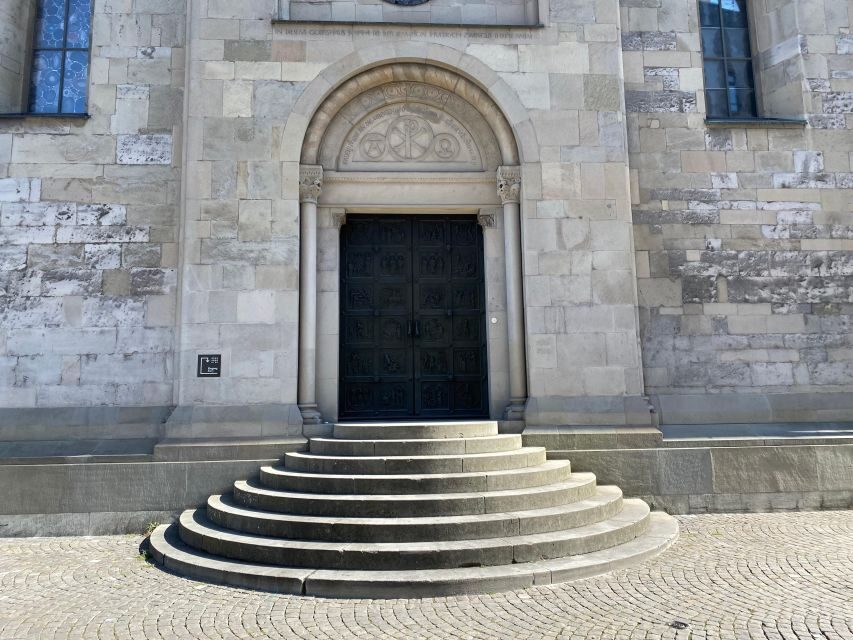
The tour includes monuments honoring major Zurich figures:
- Alfred Escher
- Johann Heinrich Pestalozzi
- Ulrich Zwingli
- Hans Waldmann
This is another smart strategy. Statues and plaques can feel like background noise unless someone tells you why they were chosen and what legacy they carry. With audio, these names become less like trivia and more like a map of Zurich’s values and conflicts.
Balanced note: since the tour includes both good and evil actions in its storytelling, these monument stops are likely to feel more nuanced than a simple “great man” approach. That’s usually where history becomes worth your attention.
Public art moments: Ganymed and Pavilion
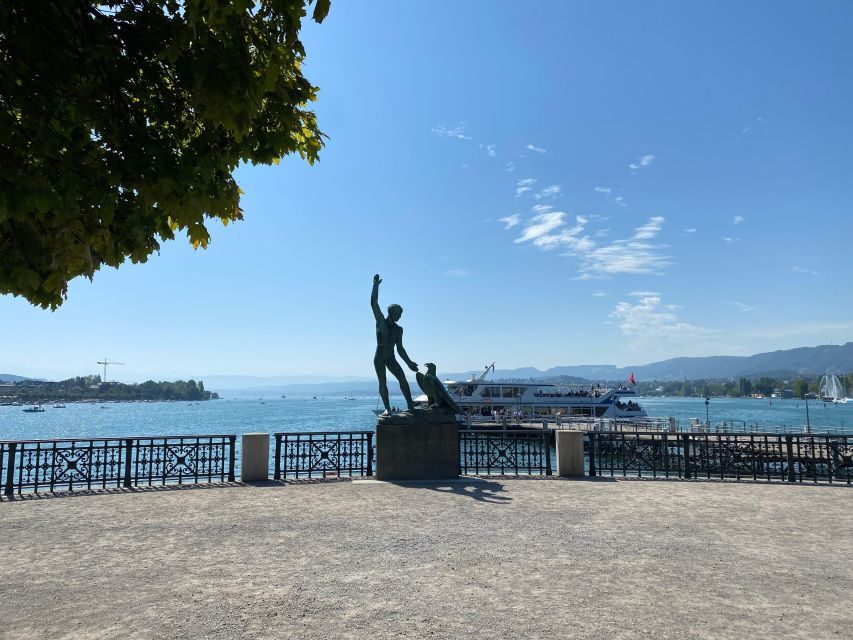
The route also includes art sculptures, including Ganymed and Pavilion. These are great for a walking tour because they add visual variety and break up the “read the story, look at the building” pattern.
Also, public art in a city like Zurich often helps you slow down. You’re forced to look at the details instead of just the skyline. It’s a good reset when the route is packed with heavy topics and major architecture.
Guild buildings: Millers, Bakers, Salt and Spice Merchants, and the Masonic Lodge
One of the tour’s most memorable themes is how it treats Zurich as a city of trades and institutions. You’ll encounter buildings tied to the guilds of:
- Millers
- Bakers
- Salt and Spice Merchants
You’ll also see the Masonic Lodge.
Why this matters: guilds aren’t only about medieval work. They’re a window into how communities regulated quality, influence, and economic power. When you attach names and stories to those buildings, you start understanding Zurich as a network of people with roles—not just famous sites.
This part is often what separates a decent audio tour from a memorable one. It gives you a city structure you can actually imagine while walking.
Urania Observatory: a practical science-style pause
The tour includes the Urania Observatory, and that’s a nice change of pace. After churches, politics, and commerce, an observatory introduces a different kind of Zurich identity—curiosity, measurement, and how people tried to understand the world.
Even if you only spend a short time here, it helps you keep your mental energy up. It’s a “wait, Zurich wasn’t only about power and trade” moment.
Route navigation: using the phone link and avoiding common hiccups
Access is through a link provided after booking. There’s no live guide waiting for you. That means your success depends on your own setup:
- a charged smartphone
- internet access
- headphones
One important consideration from real-world experience: if you show up expecting staffed help at the station area, you can get stuck if nothing is available in person. This isn’t a live-guiding service. You’re the guide, the audio is the companion.
Also, if you’re particular about photos and street-level clarity, keep a backup mapping option. One critique you may relate to is that the photo-and-description approach might not feel as complete as a turn-by-turn map. The best fix is simple: use a mapping app in parallel so you can sanity-check where you are.
Timing: what 2 to 2.5 hours feels like in practice
The total duration is 2 to 2.5 hours, which is enough time to move between clusters without rushing like you’re on a bus tour.
Here’s a realistic way to think about it:
- If you listen steadily, you’ll likely finish close to the lower end.
- If you stop for photos at major landmarks (and you will), you’ll drift toward the upper end.
- If you pause to re-orient your phone and find the next spot, build in extra minutes.
For me, the main planning value is this: you don’t need a full half-day. You can fit it into an afternoon and still keep energy for a dinner walk.
Who this audio tour is best for
This is a strong match if you:
- want an English explanation without paying for a staffed guide
- enjoy history that includes both achievements and atrocities
- like seeing famous Zurich landmarks plus a few addresses tied to ideas and politics
- are okay using your phone on the street
It’s not the best match if you:
- need mobility support, since it’s not suitable for wheelchair users
- hate self-navigation or dislike having your phone as part of the experience
If you’re traveling solo, you’ll likely enjoy the freedom. If you’re with friends, it can become a fun shared listen where one person holds the phone while others react to the stories.
Price and value: is $13 worth it?
At $13 per person, this tour is priced like a budget ticket with guide content baked in. For that price, the key value is the combination of:
- professional-speaker audio in English
- route instructions with photos and directions
- a full city-center sweep that includes both famous icons and story-driven stops
The main way it can feel less worth it is if you strongly need perfect navigation detail at every turn. If you want a strict turn-by-turn map experience, pair the audio with a mapping app on your phone so you don’t end up fighting your way back to the route.
Overall, if you’re comfortable being self-guided, you’re getting a lot of “city context” per dollar.
Final verdict: should you book this Zurich audio tour?
I’d book it if you want a quick, structured walk through Zurich’s key sights and you like history that treats people as complicated—good decisions, bad decisions, and everything in between. The audio quality and the fact that the route is supported by photos and directions makes it feel usable, not vague.
Skip it or be cautious if you’re the type who needs staff on hand or who expects a seamless, Google-Maps-style path without any extra work. This tour is for travelers who enjoy taking control of their pace.
If that sounds like you, this is a solid way to see Zurich with more meaning than just postcard photos.
FAQ
Where does the tour start?
It starts at Bahnhofplatz in Zurich.
Do I need a live guide?
No. It’s fully self-guided and you’ll use the link provided after booking.
What language is the audio guide in?
The audio guide is available in English.
How long does the tour take?
Plan on about 2 to 2.5 hours.
What do I need to bring with me?
Bring headphones, a charged smartphone, and internet access.
What’s included in the price?
A high-quality English audio guide with clear route explanation, photos, and detailed directions.
Is the tour suitable for wheelchair users?
No, it is not suitable for wheelchair users.
Is there a cancellation option?
Yes. You can cancel up to 24 hours in advance for a full refund.
How long is the tour available after purchase?
It’s valid for 365 days.
Is reserve and pay later available?
Yes, reserve now & pay later is offered to keep plans flexible.